

A dirty restroom can cost you more than a bad Yelp review. Restroom Reputation affects how customers view your business, and commercial restroom cleaning plays an important role in protecting your facility’s image.
EBS Commercial Cleaning has worked with businesses that focus heavily on customer experience while overlooking one of the strongest trust signals inside a facility. Restrooms can shape impressions quietly. Customers may never comment on a dirty bathroom, but many remember it.
Restroom complaints, lingering odors, or supply issues usually point to larger cleaning gaps that affect customer perception, employee comfort, and confidence in the business itself.
What Customers and Employees Really Think About Dirty Restrooms
Customers often connect restroom conditions with the overall quality of a business. A restroom with odors, overflowing trash, or missing supplies can create a negative impression quickly.
This becomes especially important in:
- Restaurants
- Medical offices
- Retail spaces
- Offices
- Fitness centers
Poor restroom conditions affect trust
Small details shape perception more than many businesses realize.
Customers notice:
- Empty soap dispensers
- Wet floors
- Lingering odors
- Dirty grout
- Smudges and fingerprints
People rarely announce these concerns. Some choose another business next time. Employees may feel frustrated when restroom conditions repeatedly become an issue.
Shared spaces can also become problem areas when cleaning routines lose consistency. Our guide on high-touch cleaning protocols explains how surfaces can quickly spread germs throughout a workplace.
Common Restroom Cleaning Mistakes Businesses Make
Many restroom issues continue because cleaning efforts focus on visible appearance rather than sanitation.
Surface cleaning without sanitization
Mirrors and countertops may look clean while germs remain on frequently touched surfaces.
Areas commonly missed include:
- Faucet handles
- Flush levers
- Door handles
- Stall locks
- Soap dispensers
Cleaning removes dirt. Disinfecting targets germs. Our article on disinfecting versus cleaning methods explains why many facilities treat them as the same process.
Hidden spaces often become problem areas
Bacteria and moisture collect in areas many people overlook:
- Under sinks
- Drain areas
- Toilet bases
- Grout lines
- Stall edges
Strong fragrances may temporarily hide odors, but the problem often returns.
Many facilities struggle because there is no written cleaning schedule or accountability process. Consistent hygiene protocols help reduce missed tasks and improve maintenance standards.
| Common Mistake | Result |
|---|---|
| Surface-only cleaning | Lingering bacteria |
| Fragrance masking | Odors return |
| Missed touchpoints | Germ spread |
| Inconsistent schedules | Declining appearance |
Odor Control: Why Smell Is a Red Flag for Cleanliness
Smell often creates a stronger reaction than appearance. A restroom may look clean while still making customers uncomfortable because odors signal a possible hygiene problem.
Odors usually come from hidden sources
Common odor sources include:
- Drain buildup
- Splash zones
- Moisture trapped in grout
- Waste containers
- Poor ventilation
Fragrance does not automatically create confidence.
Effective odor control usually includes:
- Removing bacteria buildup
- Deep sanitation
- Improving airflow
- Maintaining drains
The EPA disinfectant guidance provides recommendations for approved disinfectant practices in commercial facilities.
What a Professional Restroom Cleaning Routine Includes
Busy restrooms require routine care rather than occasional deep cleaning.
High-touch disinfection
Professional restroom cleaning routines help businesses maintain cleaner environments and stronger customer confidence.
Professional restroom cleaning often includes:
- Faucet cleaning
- Flush handle disinfection
- Counter sanitation
- Door hardware cleaning
- Dispenser restocking
- Sanitary disposal management
Deep cleaning tasks
Long-term maintenance should also include:
- Grout scrubbing
- Floor disinfection
- Vent cleaning
- Baseboard cleaning
- Partition detailing
- Drain treatment
Cleaner facilities often support healthier workplaces. Our article on employee wellness cleaning strategies explains how cleaner environments can help support employee well-being.
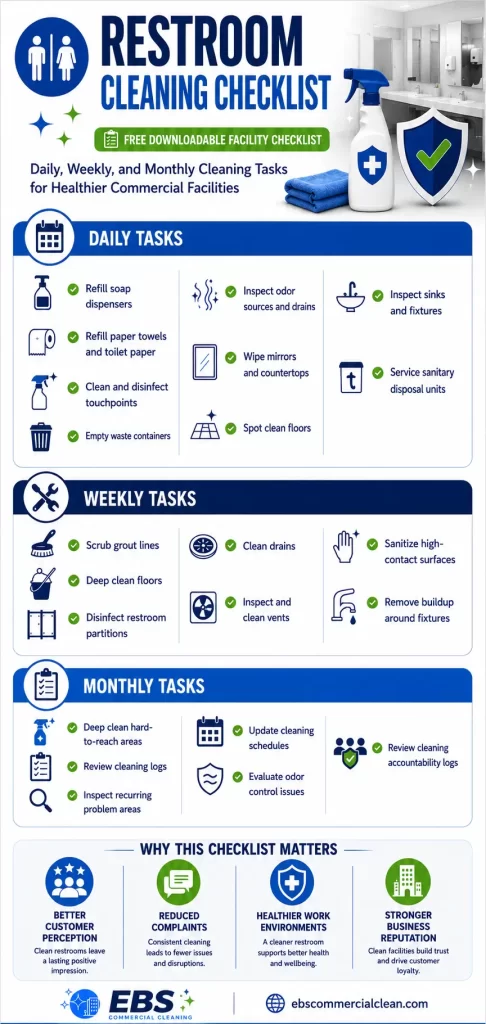
Restroom appearance usually becomes harder to maintain as traffic increases. Businesses looking for structured restroom maintenance support can review our commercial cleaning services designed for busy facilities.
How Clean Restrooms Support Your Brand and Bottom Line
Clean restrooms affect more than appearance.
Benefits often include:
- Better customer experiences
- Reduced complaints
- Reduced sick days
- Improved employee comfort
- Stronger business perception
- Better facility standards
The OSHA sanitation standards and guidance from the CDC workplace health resources help outline responsibilities related to cleaner and healthier work environments.
Preventive cleaning also reduces larger maintenance problems over time.
Why EBS Is the Go-To for Professional Restroom Cleaning
Commercial restrooms require more than quick wipe-downs. Consistency matters when facilities serve employees, customers, and visitors throughout the day.
We Focus On Healthier Commercial Environments
EBS helps businesses maintain cleaner spaces with practical cleaning systems designed around real operational needs.
Our teams provide:
- Trained cleaning crews
- Gender-sensitive team support when needed
- Products optimized for odor and germ control
- Flexible scheduling options
- Consistent maintenance routines
We Work Around Your Schedule
Cleaning should support operations rather than interrupting them.
Businesses across our commercial service areas rely on cleaning programs designed for busy facilities and changing schedules. Our crews have supported offices, shared commercial spaces, and busy facilities with consistent cleaning routines designed for heavy daily traffic.
Recurring restroom problems often point to larger maintenance gaps that continue behind the scenes.
“Restroom complaints dropped and employees immediately noticed the difference after we moved to a structured cleaning routine.” – Commercial facility client
Our cleaning process approach explains how we build cleaning routines around each facility.
What Businesses Need to Know About Restroom Cleaning
How often should commercial restrooms be cleaned?
Busy facilities may require restroom cleaning multiple times each day. Lower traffic environments still benefit from daily sanitation and scheduled deep cleaning.
Why do restrooms still smell after cleaning?
Odors often remain because bacteria inside drains, grout, or hidden moisture areas were not fully removed.
What is the difference between cleaning and disinfecting?
Cleaning removes visible dirt and debris. Disinfecting targets germs with approved products.
Can restroom cleanliness affect customer loyalty?
Yes. Clean restrooms can influence customer perception and repeat visits because many people connect restroom conditions with overall business standards.
You can find additional answers in our commercial cleaning FAQs.
Dirty restrooms create problems that go beyond appearance. Customers notice odors. Employees notice neglected conditions. Those details can shape how people view a business over time.
Don’t let a dirty bathroom damage your business image. Partner with EBS for restroom cleaning that helps protect your brand and the people who walk through your doors.
Our team at facility cleaning support can review your facility and help identify practical solutions for your environment. You can also speak directly with our team at (708) 296-9650.