

Flu season can affect attendance and daily operations before many workplaces are fully prepared. Reviewing cleaning, disinfection, ventilation, and hygiene practices early gives facility managers time to address gaps before seasonal illness increases.
A proactive flu prevention cleaning plan can support workplace hygiene and preparedness while helping teams maintain consistent facility routines.
In This Guide, You’ll Learn
- Why September is the right time to prepare
- Which workplace conditions increase flu-season risk
- How germs move through shared environments
- What a practical cleaning schedule looks like
- Why cleaning supports business continuity, not just hygiene
- How professional office cleaners can help reduce disruption
Why September Is the Best Time to Prepare
Waiting until employees start calling in sick puts your team in reaction mode. September is the better window for planning because it gives facility managers time to review cleaning routines, adjust supply levels, and identify gaps in existing cleaning and workplace hygiene routines.
Early preparation helps you:
- support consistent workplace hygiene practices during peak flu months
- keep teams productive during busy periods
- reassure employees, visitors, and customers
- avoid rushed cleaning changes once absences begin to rise
The main point: the best flu-season cleaning strategy starts before flu season feels urgent.
How Vulnerable Is Your Workplace?
Every facility has different risk factors. A quiet administrative office does not face the same exposure level as a busy reception area, clinic, school support office, or customer-facing business.
Use this quick scorecard to assess your workplace.
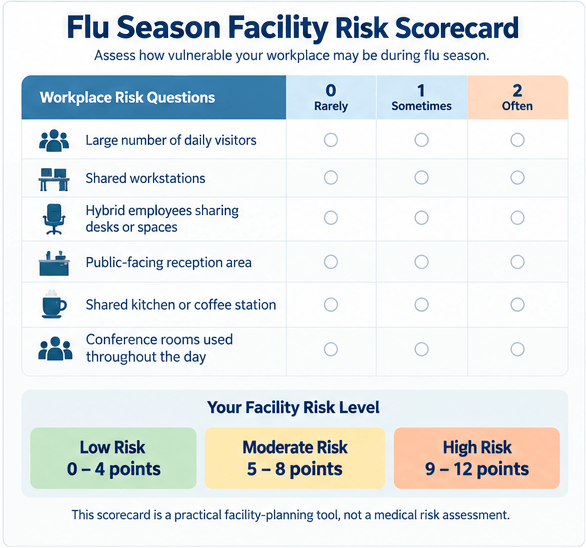
Score Your Risk
0–4 points: Low Risk
Your facility may have fewer daily contacts and fewer shared surfaces, but regular flu prevention cleaning is still important.
5–8 points: Moderate Risk
Your workplace has several shared touchpoints and needs a structured cleaning schedule with stronger disinfection habits.
9–12 points: High Risk
Your facility has frequent shared contact, higher foot traffic, or public exposure. It may benefit from more frequent cleaning, added attention to high-touch areas, and a broader flu-season hygiene plan.
What this score means:
This is not a medical assessment. It is a practical way to identify how many shared-contact conditions may need additional attention during flu season.
How Germs Travel Through an Office, Not Just Between People
Flu spreads mainly from person to person. Frequently touched shared surfaces can still be included in a broader workplace hygiene plan alongside hand hygiene, ventilation, and staying home when sick.
Here is a simple journey map.
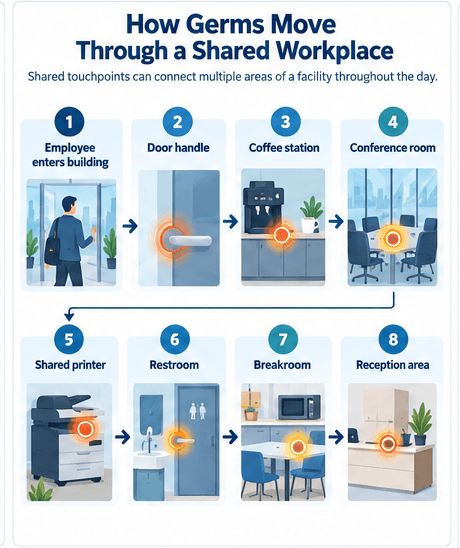
Commonly Overlooked Germ Hotspots
Many facilities clean obvious areas but miss the surfaces people touch without thinking about.
Examples include:
- door handles and push plates
- elevator buttons
- reception counters
- shared pens and clipboards
- light switches
- coffee machine buttons and fridge handles
- conference room remotes
- printer touchscreens
- faucet handles
- restroom stall latches
- microwave handles
- breakroom tables
- handrails
Shared surfaces create repeated contact points throughout the day, so they should be included in a broader workplace hygiene plan.
Build Your Flu-Season Cleaning Schedule
A strong plan is easier to follow when it is organized by frequency, not just by room. That way, the highest-touch areas get the most attention.
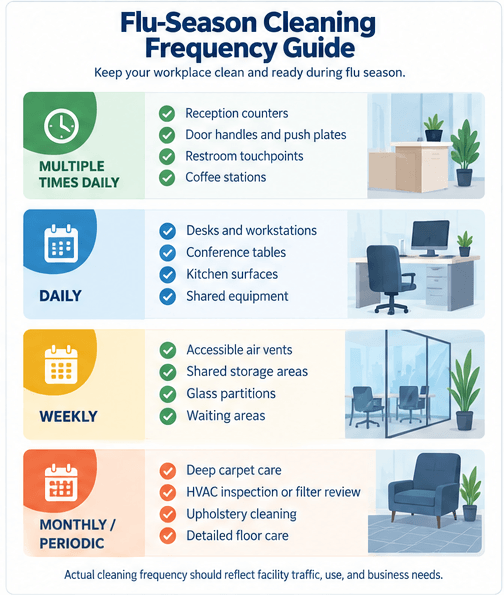
Multiple Times Daily
These are the surfaces most likely to contribute to repeated cross-contact.
- reception counters
- entry door handles
- push bars and railings
- restroom touchpoints
- coffee stations
- elevator buttons
- shared breakroom touchpoints
- other high-traffic common surfaces
Daily
These items should be cleaned consistently as part of your daily routine.
- desks and workstations
- conference tables
- kitchen counters
- shared equipment surfaces
- lobby furniture touchpoints
- phones and common-use devices
- frequently touched glass doors
Weekly
These areas may not need constant attention, but they should be built into the routine.
- air vents and accessible vent covers
- shared storage areas
- glass partitions
- waiting areas
- lower-traffic surfaces
- baseboards and detail touchpoints
Monthly
These tasks support ongoing facility maintenance throughout the season.
- deep carpet care
- upholstery cleaning
- HVAC inspection or filter review
- deeper floor care
- detail cleaning in hard-to-reach areas
Sample Flu-Season Office Cleaning Checklist
A practical office cleaning checklist during flu season should include:
- frequent cleaning of high-touch surfaces
- routine restroom sanitizing
- breakroom and kitchen cleaning
- trash removal and liner replacement
- shared-device wipe-downs
- supply checks for soap, paper towels, and sanitizer
- periodic review of touchpoint trends and traffic patterns
Facilities with heavier traffic or more shared spaces may consider adding or increasing disinfection services during peak periods.
The Sick Day Domino Effect
One missed workday rarely stays isolated. That is why flu prevention cleaning is not just about appearance. It is part of operational risk management.
What the Ripple Effect Can Look Like
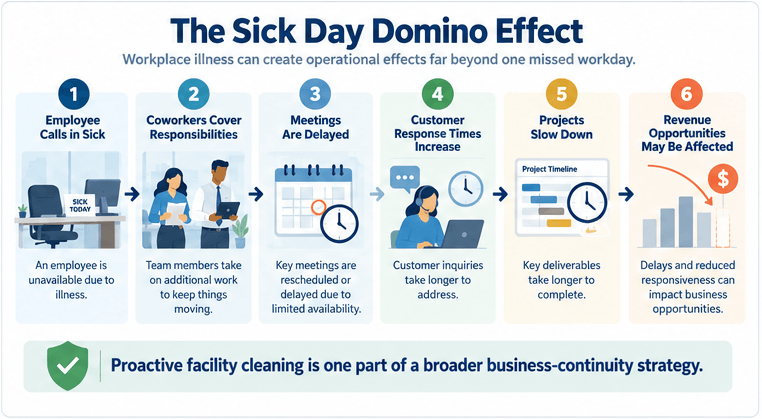
This domino effect is especially noticeable in:
- lean teams
- customer service environments
- healthcare-adjacent facilities
- operations with shift coverage requirements
- offices with project deadlines or client deliverables
Consistent cleaning can support a broader workplace hygiene and continuity plan, especially when combined with employee hygiene practices and appropriate ventilation.
Cleaning Alone Isn’t Enough
Even the best cleaning routine works better when it is supported by other practical steps. A complete flu-season response plan should combine environmental cleaning with workplace hygiene practices that support the overall plan.
1. Hand Hygiene
Make handwashing easy and visible. Stock sinks and hand-sanitizing stations consistently, especially near entrances, breakrooms, and shared spaces.
2. Ventilation
Airflow matters. Review HVAC maintenance schedules, replace filters as needed, and look for ways to improve fresh-air circulation where practical.
3. Touch-Free Dispensers
Touch-free soap, towel, and sanitizer dispensers help reduce repeated contact in high-traffic areas.
4. Cleaning Communication
Employees notice when standards are clear. Posting cleaning schedules or communicating enhanced service frequency can build confidence and encourage cooperation.
5. Employee Awareness
Simple reminders can support workplace hygiene:
- stay home when sick
- wipe shared spaces after use
- wash hands regularly
- keep personal work areas orderly
- report supply shortages quickly
A cleaner building works best when the people using it understand the plan.
When Professional Help Makes Sense
Some facilities can manage basic cleaning internally. Others need more structured support, especially during flu season.
You may benefit from disinfecting services for businesses if:
- your team is already stretched thin
- your building has heavy daily traffic
- you manage multiple shared areas
- your facility serves the public
- you operate in a more sensitive environment, such as medical or healthcare-adjacent space
Healthcare environments such as dental clinics may follow facility-specific cleaning and infection-control requirements, so the cleaning plan should reflect the needs and policies of the site.
Professional office cleaners can also help facility managers:
- identify high-risk touchpoints
- adjust frequencies by traffic level
- maintain a more consistent routine
- support seasonal response planning
- reduce the burden on in-house teams
How EBS Helps Businesses Stay Ahead of Flu Season
Flu-season cleaning works best when the service schedule reflects how a facility is actually used. EBS can adjust commercial cleaning services based on foot traffic, shared spaces, high-touch surfaces, and areas that may need more frequent attention during periods of increased illness.
For offices and other commercial properties, EBS can provide routine cleaning along with disinfection services for areas that receive frequent contact throughout the day. This can include entrances, reception areas, conference rooms, breakrooms, restrooms, shared workstations, and other common spaces.
EBS also provides healthcare facility cleaning, including cleaning for dental clinics. These environments often require closer attention to shared surfaces, patient-facing areas, waiting rooms, restrooms, and other spaces where cleanliness and consistency are especially important.
Cleaning Schedules That Fit the Facility
Not every workplace needs the same cleaning frequency. A small office with limited visitors may have different priorities from a busy dental clinic or a public-facing commercial facility.
EBS can help businesses build a schedule around factors such as:
- the number of employees and daily visitors
- how often shared spaces are used
- high-touch areas that may need more frequent cleaning
- restroom and breakroom traffic
- the type of facility and its day-to-day operations
- seasonal changes that may require additional cleaning or disinfection
This makes it easier to focus cleaning where it matters most instead of applying the same routine to every part of the building.
Product Preferences Can Be Accommodated
Some businesses have preferred cleaning or disinfecting products based on internal policies, facility requirements, or personal preference.
When a client requests a specific brand or product, EBS can purchase and use that product as part of the agreed cleaning service when appropriate. This gives facility managers more control over the products used in their workplace without requiring EBS to make broad claims about products that may vary from one account to another.
A Proactive Approach Before Flu Season Peaks
The goal is not to wait until employee absences begin increasing. Reviewing cleaning frequency, shared touchpoints, and disinfection needs before flu season becomes disruptive gives businesses time to make practical adjustments.
For some facilities, that may mean increasing attention to high-touch surfaces. For others, it may mean adding disinfection services or adjusting how often heavily used areas are cleaned.
Professional office cleaners can help keep those routines consistent while internal teams stay focused on their normal responsibilities.
“Exceptional cleaning crew who cares about the details. Affordable and personable. Highly recommended for small business owners that need a cleaning service every week.” — Rendy
Plan Ahead for Flu Season
Prepare your facility before flu-season demands increase. Contact EBS to request a customized cleaning and disinfection schedule for your workplace.Call (708) 296-9650Request a Cleaning Schedule