
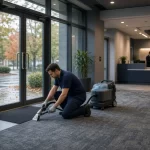
Your carpets are about to become the first line of defense against fall weather. Preparing them before rain and mud arrive with timely commercial carpet cleaning can help control moisture, reduce embedded soil, and keep your facility looking professional throughout the wetter months.
In This Guide, You’ll Learn
- Why fall is a smart time for carpet maintenance
- How one rainy day can affect more than your entrance
- What moisture can do beneath the visible carpet surface
- Warning signs that maintenance may already be overdue
- Why waiting another season can make cleaning more difficult
- How to build a practical carpet maintenance plan for your facility
One Rainy Day Can Affect Your Entire Building
Imagine a single raindrop hitting the sidewalk outside your building.
It lands on a visitor’s shoe.
That visitor walks through the front door.
The entrance mat catches some of the moisture, but not all of it.
From there, the rest of the story can move surprisingly far into the building.
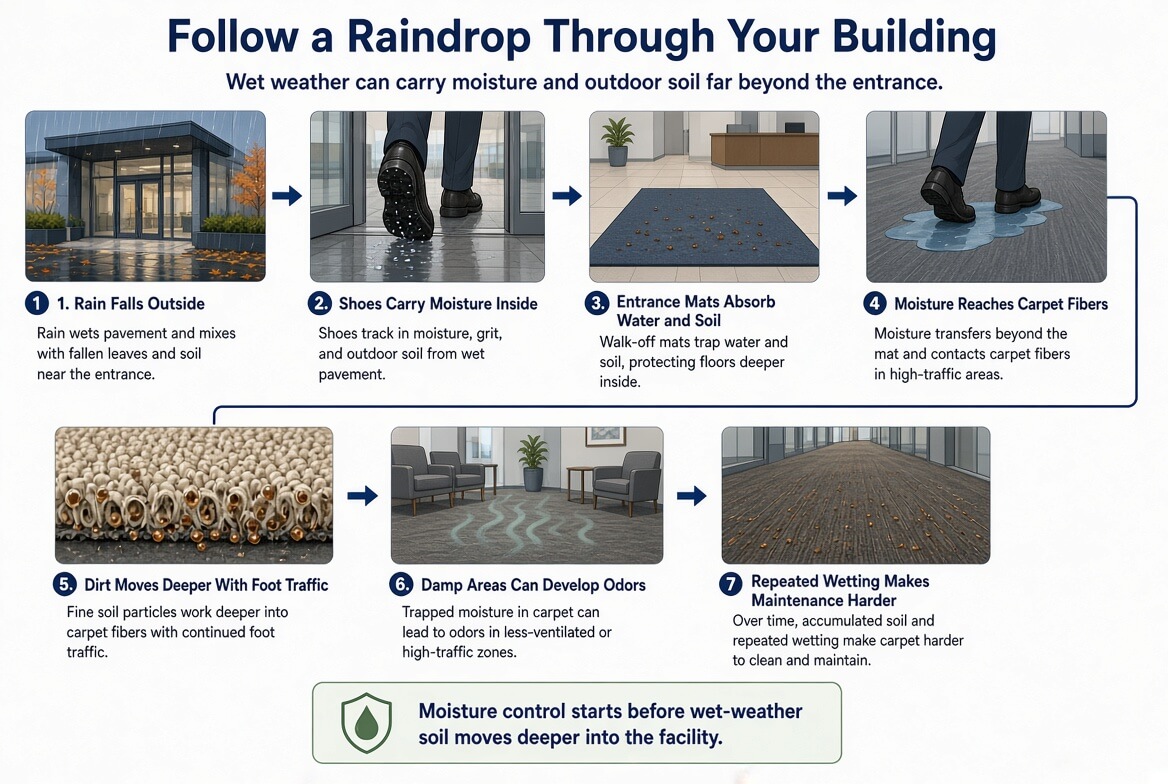
A rainy day rarely affects only the few feet directly inside the entrance.
Foot traffic can carry moisture, grit, leaves, mud, and other outdoor debris into:
- reception areas
- hallways
- workstations
- waiting rooms
- conference areas
- elevator lobbies
- common spaces
That is why moisture control should begin before consistently wet weather arrives, not after stains become obvious.
What Happens Beneath the Carpet?
Visible stains usually get the most attention.
The bigger maintenance problem, however, can be what is happening underneath the surface.
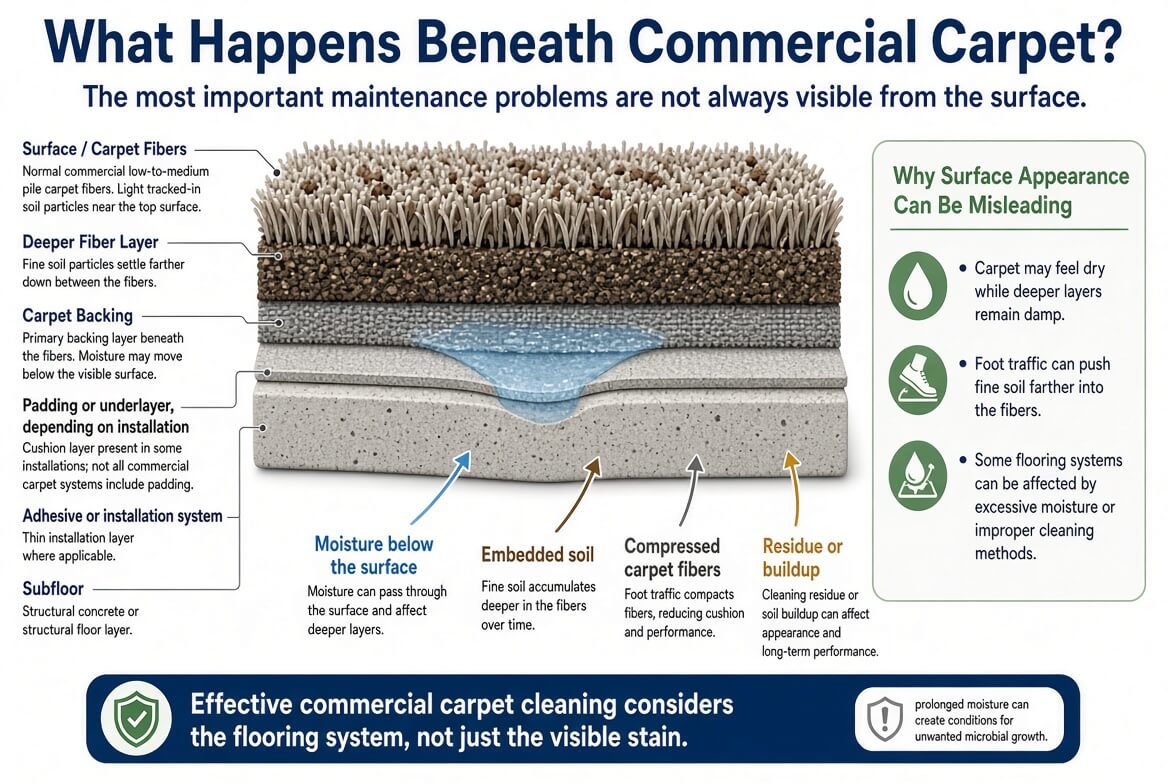
Commercial carpeting is made of more than the fibers you see. Depending on the flooring system, moisture and soil can work into the carpet backing, padding, seams, or adhesive beneath it.
Moisture Can Reach the Carpet Backing
A carpet can feel dry at the surface while moisture remains deeper in the flooring system.
Repeated exposure without enough drying time can contribute to:
- lingering dampness
- musty odors
- difficult-to-remove soil
- deterioration of some carpet components
- longer cleaning and drying times later
Prolonged dampness can create conditions favorable to unwanted microbial growth, which is another reason recurring moisture should be investigated rather than ignored.
Soil Moves Deeper With Foot Traffic
Outdoor soil is rarely just loose dust.
Wet shoes can carry:
- grit
- mud
- oils
- fine particles
- organic debris
- residues from sidewalks and parking areas
Once moisture enters the carpet, repeated footsteps can push that soil farther into the fibers.
Regular vacuuming remains important, but deeply embedded soil may eventually require professional extraction or another appropriate carpet-cleaning method.
Carpet Fibers Can Become Flattened
High-traffic lanes often start looking darker even when there is no single obvious stain.
Part of that appearance can come from accumulated soil. Repeated foot traffic can also compress carpet fibers, especially in entrances, hallways, and paths between frequently used areas.
The longer these conditions go unaddressed, the harder it may become to restore a more uniform appearance.
Adhesives and Flooring Components Matter Too
Some commercial carpet systems depend on adhesives beneath the visible flooring.
Excess moisture or inappropriate cleaning methods may affect certain flooring systems differently, which is one reason carpet type, backing, installation method, and manufacturer guidance should be considered before deeper cleaning.
Commercial carpet cleaning should address the flooring system, not simply the stain you can see.
Warning Signs You’re Already Behi
Carpet problems do not always begin with a dramatic spill.
Often, facilities get smaller warning signs first.
Walk through your building and look for the following.
Traffic Lane Discoloration
Do the main walking paths look noticeably darker than surrounding carpet?
This may indicate soil has accumulated where foot traffic is highest.
Persistent Odors
If an area continues to smell musty or stale after routine cleaning, moisture or deeply embedded soil may need closer attention.
Slow Drying After Spills
Areas that remain damp unusually long after spills or cleaning deserve investigation.
The issue may involve the carpet itself, the amount of moisture applied, airflow, or materials beneath the surface.
Mat Edges Curling or Staying Wet
Entrance mats should help protect interior flooring.
When they become saturated, worn, or curled, they can become less effective and may allow more moisture and soil to move farther inside.
Dark Entry Paths
A visibly dark route from the entrance into the facility is a strong sign that outdoor soil is being carried beyond the matting area.
Flattened Carpet Fibers
High-traffic areas may begin to look worn because the carpet pile has been repeatedly compressed.
Cleaning cannot reverse every type of physical wear, but addressing soil before it becomes deeply embedded can help with ongoing carpet care.
Sticky or Crunchy Residue
Residue may indicate an old spill, cleaning product buildup, or incomplete removal of previous treatments.
These areas can attract additional soil and become dirty again quickly.
If several of these signs are appearing at once, waiting until winter may make the maintenance job more difficult.
The Cost of Waiting One More Season
Carpet maintenance decisions are often postponed because the floor still looks “good enough.”
The question is not only whether the carpet looks acceptable today.
It is what another season of rain, mud, salt, and foot traffic could add to the problem.
Clean Before the Wet Season vs. Wait Until Winter
| Clean Before Fall Rain | Wait Until Winter |
|---|---|
| Removes existing soil before more is tracked inside | New moisture and debris accumulate on top of existing soil |
| Makes current stains easier to identify and address | Older and newer stains may become harder to distinguish |
| Gives entrance areas a fresh maintenance baseline | Traffic lanes may become progressively darker |
| Allows facility managers to review matting and moisture controls early | Saturated mats and recurring wet areas may continue unnoticed |
| Helps establish a preventive maintenance routine | Cleaning may become more reactive |
| Supports a cleaner appearance before the busiest wet-weather period | Customer-facing areas may show visible wear during the season |
The goal is not simply to clean sooner for the sake of cleaning.
It is to prevent small maintenance issues from becoming larger flooring problems.
Premature replacement can be far more disruptive than maintaining carpet consistently, particularly across larger commercial facilities.
That makes stain prevention and moisture management part of long-term building maintenance, rather than purely cosmetic work.
Prevention Starts at the Front Door
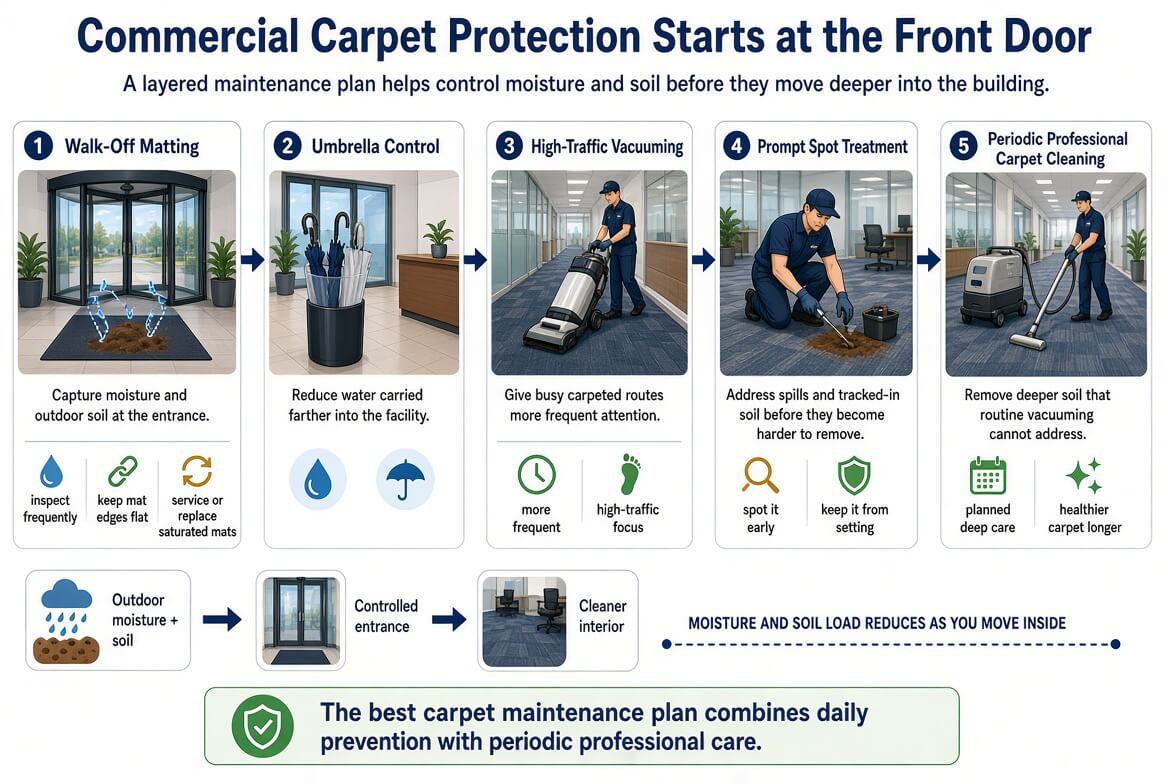
The best carpet maintenance plan does not begin with deep cleaning. It begins before dirt reaches the carpet.
A strong floor-protection system combines several layers of maintenance.
Use Effective Walk-Off Matting
Entrance mats provide the first opportunity to capture water, mud, grit, and debris.
During wet weather:
- inspect mats frequently
- replace or service saturated mats
- keep edges flat
- clean underneath them
- make sure the matting area is long enough to receive incoming traffic
A single small mat may not be sufficient for a high-traffic commercial entrance.
Consider Umbrella Stations
Wet umbrellas can create another path for water to reach floors.
Umbrella stands or bagging stations near entrances can help contain dripping water before visitors move farther into the building.
Increase Vacuuming Where Traffic Is Highest
Not every square foot of carpeting receives equal use.
Entrance routes, reception areas, hallways, and paths to common areas may need more attention than low-traffic spaces.
A good building maintenance and cleaning plan reflects these differences rather than treating every carpeted area the same.
Address Spots Quickly
Spills and tracked-in mud are easier to manage when they are addressed early.
A clear spot-treatment protocol helps staff know:
- what should be treated immediately
- which products are appropriate
- when an area should be left for professional treatment
- who should be notified about recurring problems
Because carpet fibers, dyes, backing systems, and stain types vary, use products and treatment methods that are appropriate for the flooring.
Schedule Periodic Professional Cleaning
Routine vacuuming handles loose surface soil.
Professional commercial carpet cleaning can address deeper buildup that normal daily maintenance cannot remove effectively.
The appropriate method and frequency should depend on the carpet type, traffic, soil level, and facility conditions.
Choosing the Right Carpet Maintenance Plan
There is no single maintenance schedule that fits every building.
A quiet corporate office may not need the same carpet-care frequency as a busy medical office or retail property.
The following can serve as a planning framework rather than a fixed rule.
| Facility Type | Main Carpet Challenges | Maintenance Priority |
|---|---|---|
| Corporate Office | Employee traffic, coffee spills, conference rooms, entry lanes | Consistent vacuuming, prompt spot care, periodic deeper cleaning |
| Retail Facility | Heavy customer traffic, wet entrances, visible stains | Frequent entrance maintenance and closer monitoring of high-traffic lanes |
| Medical or Dental Office | Patient traffic, waiting rooms, appearance expectations | Frequent inspection, careful spot treatment, planned professional cleaning |
| School or Educational Facility | Large volumes of foot traffic, tracked soil, food and drink spills | High-frequency routine maintenance with scheduled deeper cleaning |
| Warehouse Office | Soil transferred from operational areas, work boots, entry grit | Strong matting system and attention to transition zones |
| Property-Managed Building | Multiple tenants, shared corridors, lobby traffic | Building-wide maintenance plan based on traffic by zone |
Higher Traffic Usually Means More Attention
Instead of assigning the same interval to every property, facility managers can ask:
- How many people cross this area each day?
- Is the entrance exposed directly to rain?
- Does the facility receive customers or patients?
- Are there several carpeted entry routes?
- How quickly do entrance mats become saturated?
- Are dark traffic lanes already appearing?
- Are spills common?
- Is carpet appearance important to customer perception?
An office cleaning company can use those conditions to help determine where more frequent maintenance may be useful.
How EBS Protects Commercial Carpets Year-Round
Commercial carpet care works best when it fits into the facility’s broader cleaning routine rather than being treated as a once-a-year emergency.
EBS can review high-traffic carpeted areas with clients and incorporate carpet care into a broader commercial cleaning plan.
Review Carpet Conditions First
Before deeper cleaning, it is helpful to identify:
- major traffic lanes
- entrance-related soil
- visible stains
- recurring problem areas
- carpet type and condition
- areas affected by moisture
That inspection provides a better basis for deciding what treatment is appropriate.
Spot Treatment
Different stains may require different approaches.
Treating visible spots before full carpet cleaning can help address problem areas more deliberately instead of using one treatment across every type of stain.
Professional Carpet Cleaning
Where routine vacuuming and spot care are no longer enough, professional cleaning can help remove deeper soil and refresh high-traffic areas.
The cleaning method and equipment used should match the flooring type and condition of the carpet.
Drying Matters
The job is not finished simply because the cleaning step is complete. Managing moisture afterward is also important.
Drying conditions can be influenced by:
- carpet construction
- amount of moisture used
- room temperature
- airflow
- humidity
- ventilation
Businesses may need to plan professional carpet cleaning around building use so treated areas have appropriate time to dry before normal traffic resumes.
Preventive Recommendations
After carpet cleaning, the next step is protecting the floor from quickly returning to the same condition.
That may include recommendations for:
- entrance matting
- vacuum frequency
- spot-treatment practices
- high-traffic zones
- seasonal maintenance
- future professional cleaning
Combining carpet care with routine commercial building cleaning gives facility managers a more complete way to manage floors throughout the year.
Fall Weather Is Unavoidable. Premature Carpet Replacement Isn’t.
Rain, mud, and increased indoor traffic are part of the season.
Letting those conditions repeatedly work deeper into commercial carpeting does not have to be.
The best time to review carpet maintenance is before wet weather exposes the weak points in your existing routine. Start with entrances, check high-traffic lanes, address existing stains, and build moisture control into your broader facility plan.
Fall weather is unavoidable, but preventable carpet buildup does not have to be. Call EBS at (708) 296-9650 to discuss commercial carpet cleaning and ongoing floor-care options for your facility.