

Not everything you’ve heard about fall cleaning is true. Some common assumptions about commercial building maintenance can allow small issues to build up before winter, when heavier foot traffic, wet weather, and seasonal debris can make them harder to manage.
A practical fall commercial cleaning plan focuses on what your building actually needs before those conditions arrive.
In This Guide, You’ll Learn
Which commercial cleaning myths can lead to poor maintenance decisions
What changes inside a facility during fall
Which seasonal cleaning tasks deserve attention now
What can happen when businesses wait until winter
How to inspect your facility before colder weather arrives
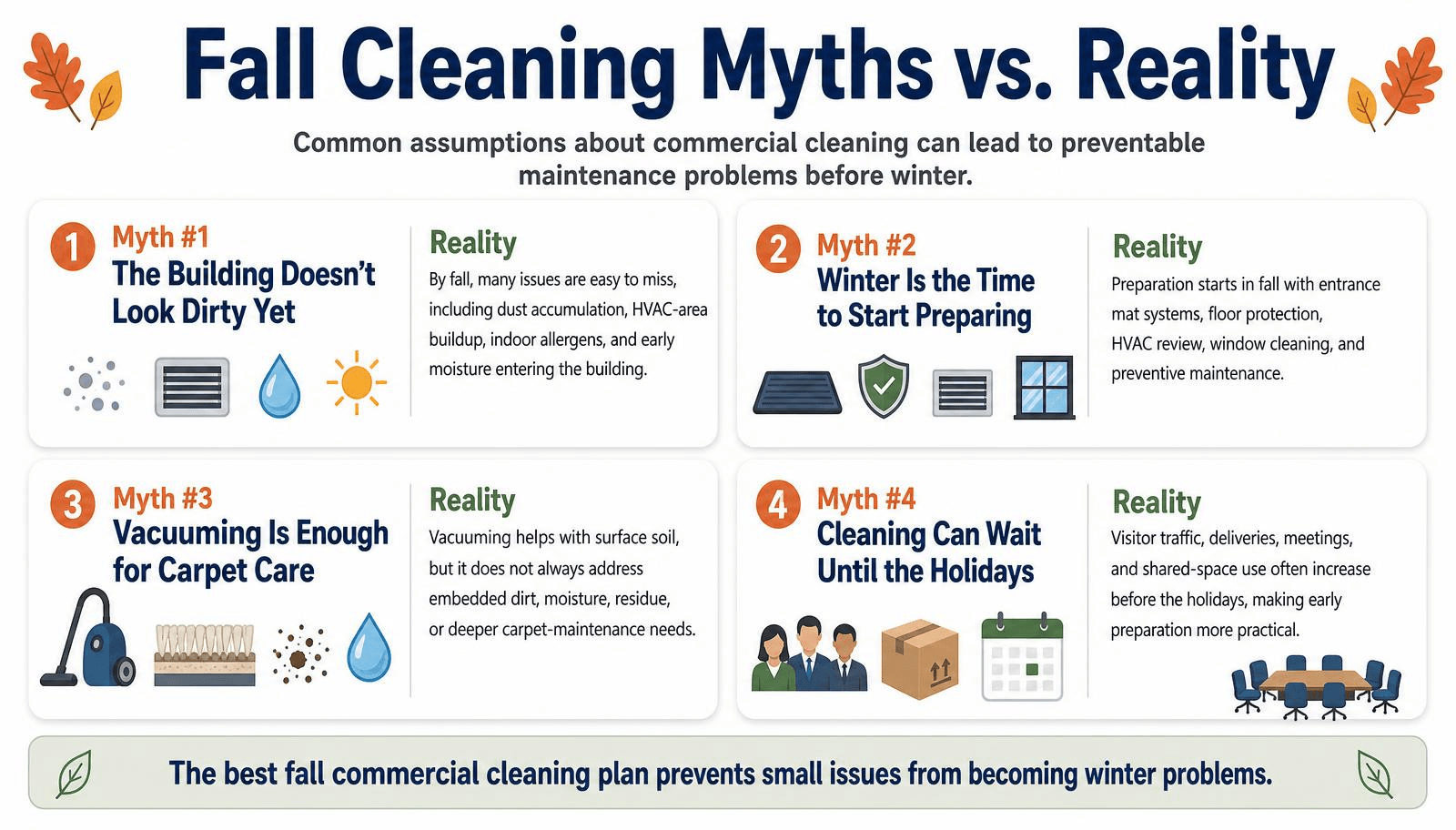
Myth #1—"The Building Doesn’t Look Dirty Yet”
Reality: Some Fall Maintenance Problems Are Easy to Miss
A facility does not need to look obviously dirty to need attention.
By October, seasonal changes can already be affecting entrances, floors, HVAC areas, windows, and other parts of the building.
Dust Accumulation Isn’t Always Obvious
Dust tends to collect gradually.
It may build up on:
- vents and grilles
- window ledges
- high surfaces
- light fixtures
- corners and edges
- furniture bases
- low-traffic areas
Because the change happens slowly, employees who see the space every day may not notice it immediately.
HVAC Areas Deserve a Look
As heating systems begin working more regularly, fall is a sensible time to check accessible vents, returns, and surrounding surfaces for dust buildup.
HVAC servicing itself should be handled by the appropriate building or mechanical professional, but cleaning teams can help keep accessible surrounding areas maintained.
Moisture Begins Following People Indoors
Rain, wet leaves, and damp shoes can start affecting entrance areas well before winter snow arrives.
That can mean more attention is needed around:
- walk-off mats
- lobby flooring
- carpeted entrances
- door thresholds
- reception areas
Less Daylight Can Hide What Bright Summer Light Revealed
Shorter days and lower natural light can make dust, streaks, and floor wear less noticeable.
That does not mean those areas are clean.
The better question isn’t “Does the building look dirty?” It’s “What has changed since summer?”
Myth #2—"Winter Is the Time to Start Preparing”
Reality: Winter Preparation Should Begin in Fall
Waiting for the first snowstorm or stretch of freezing weather puts building maintenance into reaction mode.
Fall gives facility managers time to inspect the areas winter will place under the most pressure.
Check Entrance Mat Systems
Entrance mats help capture moisture and outdoor debris before they move farther into the building.
Before winter:
- inspect mat condition
- check for curled edges
- make sure mats stay flat
- review whether entry coverage is adequate
- plan for more frequent servicing during wet weather
Protect Hard Floors
Rain, grit, mud, and eventually deicing residue can increase the maintenance burden on hard flooring.
Reviewing floor condition in fall provides an opportunity to address existing wear before winter traffic adds more.
Review HVAC Maintenance
Confirm that building-maintenance personnel or HVAC professionals have the heating system and filters on the appropriate seasonal schedule.
Cleaning staff can also check accessible vent areas and surrounding surfaces for accumulated dust.
Clean Windows Before Winter Weather Builds Up
Fall weather can leave visible residue on exterior glass, and colder conditions can make some window-cleaning work less convenient.
Fall window cleaning can help remove accumulated summer dust, fingerprints, and exterior residue before colder weather makes some cleaning work less convenient.
Handle Small Problems Before They Become Urgent
Fall is also a good time to look for recurring issues such as:
- wet entrance areas
- worn matting
- floor discoloration
- carpet traffic lanes
- neglected corners
- recurring restroom problems
- supply-storage gaps
That is the difference between preventive building maintenance and reactive cleanup.

Myth #3—"Vacuuming Is Enough for Carpet Care”
Reality: Vacuuming Handles Surface Soil, Not Every Carpet Problem
Routine vacuuming is one of the most important parts of carpet maintenance.
But it has limits.
Foot traffic can move fine soil deeper into carpet fibers over time. Wet weather can also introduce moisture, mud, residue, and other debris that routine vacuuming may not fully address.
What Fall Cleaning Myths Miss About Carpet Care
Depending on carpet type, traffic, and conditions, deeper cleaning may be needed to address:
- embedded soil
- traffic-lane buildup
- old spots and spills
- sticky residues
- moisture-related concerns
- fine particles below the visible surface
This is where commercial carpet cleaning becomes part of a broader seasonal maintenance plan.
Professional cleaning should be based on the condition and construction of the carpet rather than an arbitrary seasonal schedule.
Vacuuming is maintenance. Deeper carpet cleaning addresses problems routine maintenance cannot always reach.
What Facility Managers Wish They Had Done Last October
Some fall cleaning myths sound reasonable until wet weather and heavier seasonal traffic reveal the maintenance problems they overlook.
The following are illustrative facility-management scenarios, not EBS client case studies.
Scenario 1: “We Waited Until the First Snowstorm”
The entrance floor looked acceptable in October, so seasonal floor preparation was postponed.
Then winter weather arrived.
How Winter Conditions Can Increase Floor Maintenance Needs
The Better Fall Move
Inspect high-traffic flooring before winter and address existing soil, worn finishes, or carpet buildup before additional seasonal debris arrives.
Scenario 2: “The Entrance Mat Was Fine Last Year”
The building reused the same entrance setup without checking its current condition.
Heavy fall rain exposed the problem.
How Matting Problems Affect Interior Floors
The Better Fall Move
Inspect matting before wet weather increases. Make sure mats lie flat, remain serviceable, and provide enough coverage for the volume of traffic entering the building.
Scenario 3: “We Thought the Carpet Just Needed Vacuuming”
Dark entrance lanes were treated as ordinary surface dirt.
Weeks of rain added more moisture and tracked-in debris.
How Embedded Soil Can Build Up Before Winter
The Better Fall Move
Inspect high-traffic carpet before winter and determine whether routine vacuuming is still sufficient.
Myth #4—"Cleaning Can Wait Until the Holidays”
Reality: Holiday Traffic Can Make Deferred Cleaning Harder
The weeks leading into the holidays often bring changes in how commercial spaces are used.
Depending on the business, that can include:
- more visitors
- year-end meetings
- deliveries
- employee gatherings
- customer appointments
- seasonal events
- increased use of shared areas
Waiting until that activity begins can leave facility managers trying to catch up while the building is already busier.
Fall Preparation Creates Breathing Room
A seasonal cleaning review in October gives businesses time to address:
- carpets
- hard floors
- glass
- restrooms
- breakrooms
- conference rooms
- entrances
- high-touch surfaces
- neglected detail cleaning
An office cleaning company can also help identify areas where service frequency may need to change as building use changes.
Preparing early does not mean cleaning everything more often.
It means adjusting the plan where the facility actually needs it.
Your Fall Facility Inspection Checklist
Use the interactive checklist below to review entrances, floors, restrooms, HVAC areas, breakrooms, meeting spaces, lighting, and glass before winter weather and year-end traffic arrive.
Fall Facility Inspection Checklist
Review your building before winter weather and year-end traffic arrive. Check each item as you inspect your facility.
Facility Inspection Progress
0 of 0 checked · 0%
1 Exterior & Entry Area 0 of 6 ▼
2 Lobby & Reception 0 of 5 ▼
3 Carpeted Areas 0 of 5 ▼
4 Hard Floors 0 of 5 ▼
5 Restrooms 0 of 5 ▼
6 HVAC & Vent Areas 0 of 4 ▼
HVAC servicing should be handled by the appropriate building or mechanical professional.
7 Breakroom 0 of 5 ▼
8 Conference Rooms 0 of 5 ▼
9 Lighting & High Surfaces 0 of 4 ▼
10 Windows & Glass 0 of 4 ▼
Photograph recurring problem areas during your inspection. Comparing the same locations over time can make it easier to see whether your current maintenance schedule is working.
You’ve reviewed the key areas that may need attention before winter. Use your findings to prioritize cleaning, floor care, carpet maintenance, and other seasonal service needs.
EBS can review your facility’s seasonal cleaning needs and recommend a maintenance plan based on your building and traffic patterns.
Call EBS: (708) 296-9650This gives commercial building cleaning a seasonal rhythm instead of turning winter preparation into one large last-minute project.
How EBS Helps Businesses Prepare Before Winter
Fall is a good time to look at the facility as a whole rather than waiting for winter to expose individual maintenance problems.
EBS begins by reviewing the client’s facility and cleaning needs so the service plan reflects the building, traffic patterns, and seasonal priorities. That first-step assessment can help identify areas that may need more attention before colder weather arrives.
Depending on the facility, EBS can support seasonal preparation with:
- customized commercial cleaning services
- entrance, lobby, restroom, breakroom, and office cleaning
- carpet and floor care
- seasonal service adjustments
- overnight or after-hours cleaning when needed
- preventive maintenance recommendations
- before-and-after project photos when appropriate
For businesses that need cleaning completed outside normal operating hours, EBS can also schedule overnight service when needed. That can help reduce disruption in offices, healthcare settings, and other active commercial spaces.
Preventive Recommendations Before Winter
EBS can also provide preventive maintenance recommendations based on what is observed during the initial review.
These may include suggestions around:
- entrance matting
- floor-care frequency
- carpet maintenance
- high-traffic cleaning
- wet-weather problem areas
- restroom and common-area attention
- seasonal service changes
The goal is to identify small maintenance concerns before winter traffic, moisture, and seasonal debris make them harder to manage.
Professional office cleaners can also complete scheduled seasonal work outside normal business hours when needed.
Don’t Let Winter Be Your Facility Inspection
Winter has a way of revealing maintenance gaps: worn entrance mats, neglected carpet lanes, vulnerable floors, dirty glass, and cleaning routines that no longer match building traffic.
October gives facility managers a chance to address those issues first.
Don’t wait for winter to expose maintenance problems. Call EBS at (708) 296-9650 to discuss seasonal commercial cleaning and prepare your facility before the busiest part of the year arrives.