

When to Schedule Floor Stripping and Waxing for Best Results
Floor stripping and waxing is a process that removes old floor finish and applies a new protective coating to restore shine, improve safety, and extend floor lifespan. Spring is the best time because it removes winter damage and allows finishes to cure properly.
Floor stripping and waxing in spring works best because it removes winter damage, improves safety, and allows protective coatings to cure properly for longer-lasting results.
After winter, most floors don’t just look worn—they’ve lost their surface protection layer entirely. That breakdown affects safety, appearance, and long-term durability across commercial spaces.
Key benefits of spring floor stripping and waxing:
- Remove winter salt and debris
- Improve slip resistance and safety
- Extend floor lifespan
- Prepare for high-traffic use
As a team at EBS Commercial Clean, we often see facilities regain consistency and performance when seasonal floor refinishing is handled at the right time.
Spring Conditions Support Stronger Floor Finish Results
Winter damage accumulates gradually, and spring provides the ideal conditions to reverse it with proper surface restoration. Stable temperatures and lower humidity improve how a protective floor coating bonds and cures.
In many real cases, delaying maintenance even one season leads to visible wear increasing by over 40% in high-traffic areas. In one retail facility, entryways showed clear finish breakdown within just eight weeks when seasonal maintenance was skipped.
That delay often turns a simple maintenance job into a costly restoration project. For facility managers, this often shows up as rising maintenance complaints and inconsistent floor appearance.
Why is spring the best time for floor stripping and waxing?
- Removes salt, sand, and embedded debris
- Supports proper curing of the floor finish system
- Prepares surfaces for increased traffic loads
Facilities aligning commercial floor maintenance programs with seasonal timing typically see longer-lasting finishes and fewer recurring issues.
Floor Stripping and Waxing Rebuilds Surface Protection
Routine cleaning maintains appearance, but floor stripping and waxing resets the entire surface by removing compromised layers and applying a new finish. This is where true floor finish restoration occurs.
Process Comparison: Cleaning vs Restoration
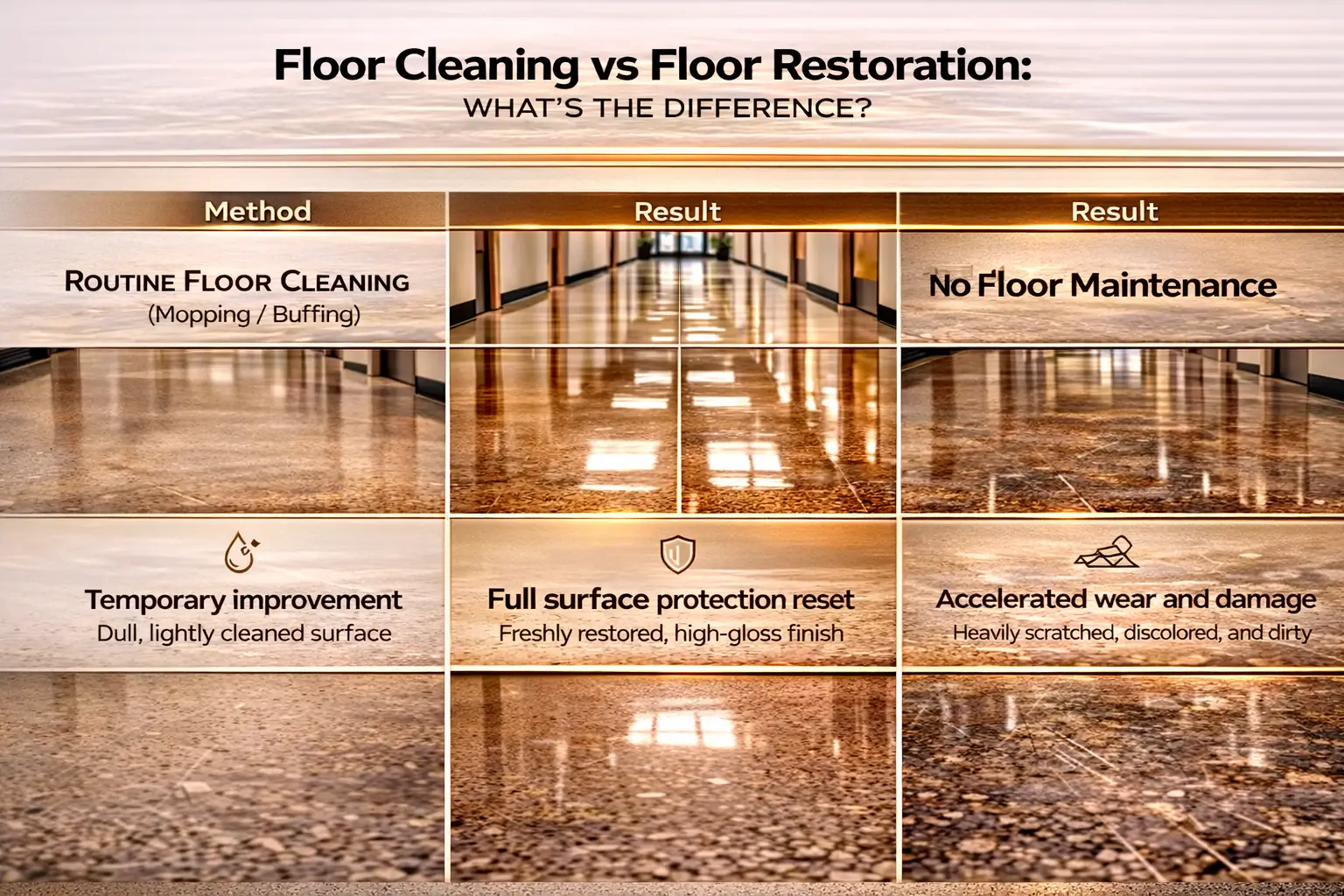
This visual helps simplify…
(Image: Before and after commercial floor restoration showing dull vs restored finish)
Floors with maintained protective coatings can last up to 2–3x longer than untreated surfaces in commercial environments.
Based on actual scenarios, relying only on cleaning creates a cycle where surfaces degrade faster than they can be maintained.
Surface Wear Signals Become Costly When Ignored
Early signs of deterioration indicate that the surface protection layer has already failed. Ignoring them shifts the issue from maintenance into repair.
What we often see across facilities includes:
- Yellowing or hazy surfaces
- Scuffs that remain after cleaning
- Uneven shine in traffic lanes
- Increased slip risk
Why do these signs matter?
- Haze indicates oxidation of the finish
- Uneven shine shows traffic damage patterns
- Persistent marks reveal coating breakdown
OSHA workplace safety guidelines emphasize maintaining slip-resistant flooring to reduce injury risk in commercial spaces.
Many businesses wait too long, only recognizing the issue when restoration becomes significantly more expensive.
High-Traffic Flooring Requires Targeted Maintenance
Different materials respond differently to wear, and certain surfaces depend heavily on structured maintenance to remain durable.
Key surfaces that benefit most include:
- VCT requiring consistent VCT care and VCT floor refinishing
- Linoleum needing renewal of the surface protection layer
- Epoxy floors maintaining durability under pressure
- Sealed concrete used in visible commercial areas
In many real cases, untreated VCT surfaces deteriorate quickly because the material absorbs direct impact without a protective coating.
Guidance from the CDC highlights the importance of maintaining durable, cleanable surfaces in shared environments: CDC cleaning standards.
Applying the right hard floor care solutions ensures performance remains consistent without premature replacement.
Preventative Floor Care Improves Cost Control and Efficiency
Delaying maintenance increases long-term costs, while proactive care stabilizes both performance and budgeting. A structured approach turns maintenance into a predictable system.
Facilities using commercial janitorial services as part of janitorial maintenance programs often experience measurable improvements in efficiency and consistency.
Maintenance Decision Checklist:
- Are floors showing uneven shine or discoloration?
- Is cleaning becoming less effective over time?
- Are high-traffic areas wearing faster than expected?
- Has it been over 6–12 months since last refinishing?
Businesses integrating floor shine solutions into commercial building cleaning plans reduce repair frequency and extend surface lifespan.
Working with a provider offering commercial cleaning services ensures maintenance aligns with operational needs.
The Right Floor Care Partner Determines Long-Term Results
Service quality directly impacts how long finishes last and how well floors perform under daily use. Inconsistent application often leads to repeated maintenance cycles.
A provider specializing in commercial floor stripping services ensures proper preparation, coating application, and durability.
Provider Evaluation Factors:
- Experience with high-traffic commercial floors
- Use of advanced equipment and materials
- Flexible scheduling to avoid disruption
- Proven consistency across projects
As a commercial cleaning company, EBS Commercial Clean focuses on delivering reliable results that support long-term facility performance.
Choosing the right partner protects your flooring investment and reduces recurring issues.
Decision Framework for Floor Maintenance Planning
Use these questions as a final checklist before making a decision.
How often should floor stripping and waxing be scheduled?
Most commercial floors require service every 6–12 months depending on traffic levels and material type.
What determines whether immediate service is needed?
Visible wear, uneven shine, and persistent scuffing indicate that the protective coating has failed.
Does this process reduce safety risks?
Yes. Restored finishes improve traction and align with workplace safety expectations, consistent with OSHA safety recommendations.
Is preventative maintenance more cost-effective than replacement?
Yes. Regular refinishing significantly extends floor lifespan and reduces capital expenses.
Why Floor Stripping and Waxing Matters for Long-Term Performance
Floor stripping and waxing restores surface protection, improves safety, and extends the lifespan of commercial flooring when timed correctly. Spring provides the ideal conditions to remove winter damage and apply a durable finish system that performs under heavy use.
Facilities that prioritize seasonal floor stripping and waxing maintain a consistent appearance, reduce liability risks, and avoid costly repairs. Delayed maintenance often leads to deeper wear and shorter flooring life cycles.
Restore your floors before damage accelerates and protect your facility from rising repair costs.
Schedule your spring floor stripping and waxing now before high-traffic season accelerates wear and increases repair costs.