
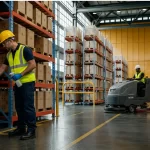
Industrial Cleaning helps warehouses prepare for summer inspections, reduce safety risks, and keep operations running efficiently. EBS Commercial Cleaning removes dust buildup, spills, and grime that can increase workplace hazards during the busiest months of the year.
Summer brings open dock doors, dry air, heavier traffic, and warmer temperatures that increase dust, residue, and grease buildup. A proactive cleaning plan supports safer employees, smoother operations, and stronger inspection readiness.
Businesses looking for dependable facility support often begin by reviewing industrial cleaning services that align with their operational requirements and long-term maintenance goals.
Why Industrial Cleaning Matters More in the Summer
Summer conditions create more opportunities for contamination, dust accumulation, and safety hazards. Warehouses require deeper cleaning during this period to maintain safe, efficient operations and prepare for seasonal inspections.
Open dock doors and dry summer air increase dust inside the facility, while higher temperatures cause grease and residue to build up more quickly on equipment and work surfaces. What we often see is that small housekeeping issues become larger safety concerns when left unaddressed during busy summer operations.
Common summer cleaning challenges include:
- Increased airborne industrial dust
- More debris entering through loading areas
- Faster buildup in high-traffic zones
- Additional strain on maintenance schedules
- Greater exposure to slip hazards
Facilities that address these issues early are often better positioned for inspections and daily operations.
Airborne dust can affect both cleanliness and workplace safety. Guidance from OSHA highlights the importance of maintaining safe working conditions in active industrial environments.
How Summer Conditions Affect Warehouse Safety
A warehouse may appear clean at ground level while hidden contamination develops elsewhere. Dust frequently accumulates above shelving, rafters, high-bay lighting, ventilation systems, and storage racks where it often remains unnoticed until inspections or maintenance work begins.
Based on actual scenarios, overhead buildup eventually spreads throughout the facility and affects inventory, equipment, and employee workspaces. This creates avoidable safety concerns and additional cleaning costs later.
A warehouse can look clean from the entrance while still collecting residue along forklift routes or debris near loading areas. Managers who maintain consistent cleaning schedules generally experience fewer operational disruptions and easier facility reviews.
Key Warehouse Zones That Demand Cleaning Attention
High-traffic warehouse zones require the most attention because they collect dirt and debris faster than lower-use areas. Keeping these locations clean helps reduce safety risks and supports smoother daily operations.
Loading docks remain one of the busiest parts of any warehouse. Constant movement from trucks, forklifts, employees, and deliveries creates conditions where dirt and debris accumulate quickly. This makes loading dock sanitation an important part of every maintenance plan.
Areas that typically require the most attention include:
- Loading docks
- Forklift travel lanes
- Receiving areas
- Shipping stations
- Storage racks
- Breakrooms
- Employee restrooms
- High-bay lighting
These locations influence workplace safety, cleanliness, and operational efficiency throughout the facility.
Hidden Areas That Frequently Get Overlooked
Visible floors rarely tell the whole story. Dust gradually settles on overhead beams, shelving, lighting fixtures, and ventilation systems where routine cleaning often becomes difficult.
In many real cases, managers only notice these areas while preparing for inspections or completing maintenance work. Over time, accumulated debris can affect air quality, visibility, and overall workplace conditions.
Facilities operating across multiple locations can review our service coverage areas to determine where our teams provide ongoing commercial cleaning support.
Industrial Cleaning Services That Go Beyond Sweeping
Sweeping removes visible debris, but deeper cleaning addresses contaminants that affect safety, compliance, and equipment performance. Larger industrial facilities often require specialized equipment to maintain consistent results.
Professional services commonly include:
- HEPA vacuuming
- Dust extraction
- Degreasing
- Pressure washing
- Surface sanitizing
- High-bay cleaning
- Floor scrubbers for wide-aisle warehouses
- warehouse mopping
Professional warehouse cleaning goes well beyond removing visible dirt. Specialized equipment and proven cleaning methods help reduce contamination, improve workplace safety, and support smoother daily operations.
HEPA vacuum systems capture fine dust that traditional sweeping often leaves behind, helping improve indoor air quality in active warehouse environments. Degreasing and pressure washing remove heavy residue from loading areas, production spaces, and equipment surfaces where buildup can affect both safety and efficiency.
Floor scrubbers designed for wide-aisle warehouses clean large traffic areas more consistently than manual methods while helping reduce slip hazards caused by dirt and residue. Safe chemical handling also remains an important part of every cleaning program. Cleaning products should be used according to manufacturer instructions, and Safety Data Sheets (MSDS/SDS) should be available to support employee safety, training, and inspection readiness.
Inspection Preparation Starts Before Inspection Day
Inspection readiness improves when cleaning remains consistent throughout the year instead of becoming a last-minute task. Facilities that wait until an inspection is scheduled often spend more time correcting preventable issues.
The best preparation sequence is simple: review high-risk zones, remove visible hazards, document recurring issues, and schedule deeper cleaning before inspection pressure builds.
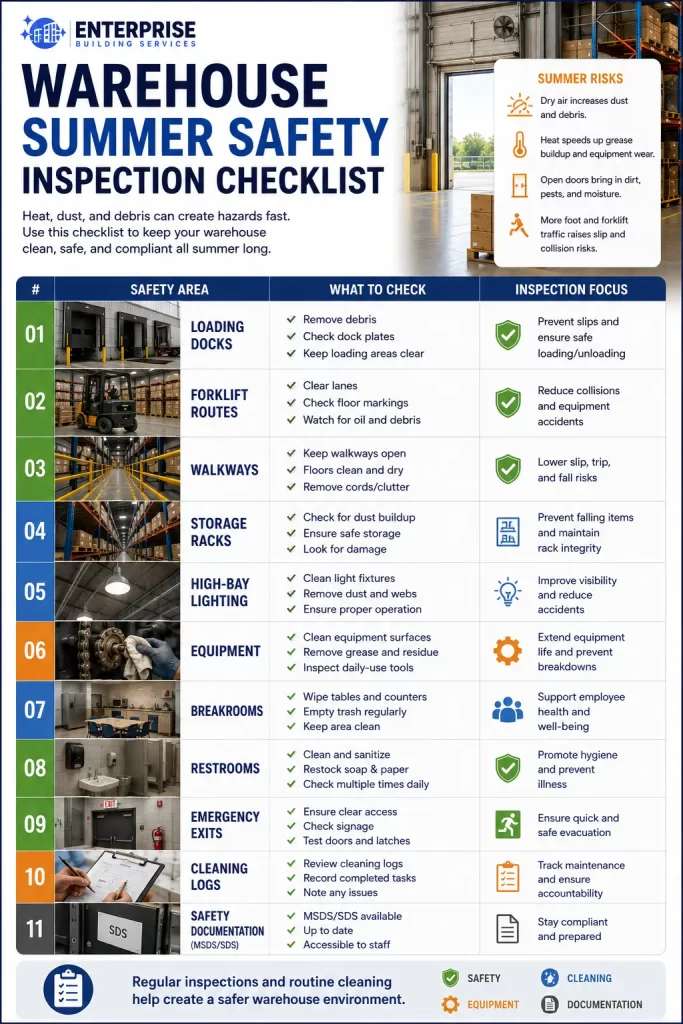
This visual helps simplify summer warehouse cleaning priorities and safety inspection preparation.
A structured approach also helps support warehouse cleaning services that focus on both appearance and operational safety rather than surface-level cleaning alone.
How Industrial Cleaning Supports Safety Protocols
Inspection readiness improves when cleanliness becomes part of daily operations instead of a last-minute response. Clean facilities are easier to evaluate, safer to operate, and better prepared for regulatory reviews.
A common mistake is assuming inspections focus only on paperwork or equipment. Based on actual scenarios, inspectors also evaluate housekeeping standards, access routes, storage practices, and workplace hazards throughout the facility.
Key operational priorities include:
- Clear walking paths
- Organized storage areas
- Clean equipment surfaces
- Dust management programs
- Documented maintenance schedules
- Accessible emergency exits
These priorities help reduce workplace hazards while supporting safer daily operations and stronger inspection readiness.
How Cleaning Supports OSHA Inspection Preparation
Many warehouse managers begin preparing for inspections only after receiving notice of a review. This often creates unnecessary pressure and increases the chance of overlooked issues.
Facilities that maintain consistent cleaning programs are generally better positioned for OSHA prep because workplace conditions remain organized throughout the year. The most effective preparation begins by reviewing high-risk areas, correcting hazards early, and documenting routine maintenance before inspections are scheduled.
Workplace health considerations also extend beyond visible cleanliness. Research published by NIOSH continues to emphasize reducing employee exposure to workplace contaminants.
Common inspection concerns include:
| Area | Potential Concern |
|---|---|
| Walkways | Trip hazards and obstructions |
| Storage Areas | Poor organization |
| Equipment | Dirt and residue buildup |
| Floors | Slip hazards |
| High-Bay Areas | Excessive dust accumulation |
| Emergency Routes | Restricted access |
What we often see is that many inspection findings are preventable through routine housekeeping, documented service records, and consistent maintenance. Cleaning logs and service records also help demonstrate that routine work has been completed before inspections.
Cleaning Supports More Than Compliance
A cleaner facility does more than help with inspections. It also supports employee safety, operational efficiency, improved equipment performance, and longer equipment service life by reducing unnecessary dirt, dust, and residue buildup.
Consider two similar warehouses. One relies on occasional deep cleaning before major events. The other follows a structured cleaning schedule throughout the year.
The second facility typically experiences:
- Fewer last-minute cleaning projects
- Better workplace organization
- Easier facility reviews
- Reduced operational disruptions
- Better equipment reliability
This difference highlights why cleaning should become part of everyday facility operations instead of a temporary response.
Managers looking for additional guidance often find useful insights in our article on cleaning versus disinfecting, which explains how different cleaning approaches support workplace safety and facility management.
How EBS Handles Industrial & Warehouse Facilities
Warehouse environments create unique cleaning challenges because operations continue throughout the day. Effective cleaning programs must support productivity while reducing workplace risks.
EBS Commercial Cleaning develops customized service plans around facility conditions, operational schedules, traffic patterns, and safety priorities. Our trained team follows appropriate PPE requirements, offers flexible scheduling for facilities operating 24/7, and has experience supporting manufacturing, logistics, and food-grade warehouse environments whenever specialized cleaning protocols are required.
Our process typically includes:
- Facility walkthrough
- Risk area identification
- Custom scope of work
- Scheduled maintenance planning
- Ongoing performance review
This structured process helps maintain consistency while allowing facilities to adapt as operational needs change.
How Do You Know When a Warehouse Needs Professional Cleaning?
Cleaning needs often become noticeable when dust accumulation increases, floor conditions worsen, inspection preparation takes longer, or employees begin reporting recurring cleanliness concerns.
Facilities experiencing these patterns usually benefit from a structured maintenance program rather than occasional reactive cleaning.
Experience Across Different Industrial Environments
Different industries create different cleaning challenges.
Manufacturing facilities often generate production residue. Logistics warehouses experience constant forklift traffic and loading activity. Food-grade facilities require stricter sanitation procedures to help support regulatory expectations and workplace hygiene.
In many real cases, applying one cleaning approach across every facility creates inconsistent results. Customized cleaning plans generally provide better long-term performance.
Businesses interested in learning more about our experience, our values, and the industries we serve can visit our company background to learn more about our team and our approach to commercial cleaning.
High-Touch Areas Often Influence Workplace Health
Floors and storage areas receive significant attention, yet frequently touched surfaces also influence workplace cleanliness.
Examples include:
- Door handles
- Time clocks
- Shared equipment controls
- Breakroom counters
- Handrails
A facility may appear clean while still containing overlooked touchpoints employees use throughout the day.
Managers looking to strengthen sanitation efforts can review our article covering high-touch cleaning zones for practical recommendations that support healthier workplaces.
Why Proactive Cleaning Outperforms Reactive Cleaning
Waiting until a problem becomes visible usually creates more work than maintaining consistent cleaning standards throughout the year.
The difference between reactive and proactive maintenance affects workplace safety, operational efficiency, inspection readiness, and long-term maintenance costs.
Environmental cleaning practices also support broader facility goals. Resources provided by the EPA offer guidance that helps organizations maintain cleaner and healthier workplaces.
| Reactive Approach | Proactive Approach |
|---|---|
| Last-minute preparation | Ongoing readiness |
| Higher correction costs | Better cost control |
| More operational disruption | Fewer interruptions |
| Inspection pressure | Greater confidence |
| Recurring issues | Long-term consistency |
Facilities following proactive cleaning schedules are generally better prepared for inspections, customer visits, and day-to-day operations.
Additional facility maintenance guidance is available in our article discussing floor stripping and waxing benefits, which explains how routine floor care supports workplace safety and appearance.
Why Summer Cleaning Decisions Affect Long-Term Safety
Summer activity places additional pressure on warehouses, logistics centers, and industrial facilities. Open dock doors, higher temperatures, increased traffic, and daily wear can all influence workplace safety, inspection readiness, and operational performance when routine cleaning is delayed.
Facilities that treat cleanliness as an ongoing operational priority often experience fewer disruptions, better workplace organization, and stronger inspection readiness throughout the year.
Frequently Asked Questions
How often should a warehouse receive professional cleaning?
Cleaning frequency depends on facility size, employee traffic, production activity, and operational requirements. Many facilities benefit from combining scheduled maintenance with periodic deep cleaning.
What areas do inspectors commonly evaluate?
Inspectors commonly review housekeeping practices, storage conditions, walkways, emergency access routes, dust accumulation, equipment cleanliness, and overall workplace safety.
Can cleaning help reduce workplace injuries?
Yes. Consistent cleaning reduces slip hazards, debris buildup, visibility concerns, and other preventable conditions that may contribute to workplace injuries.
What is the biggest summer cleaning challenge for warehouses?
Many facilities experience increased dust, debris entering through loading areas, grease buildup, and heavier operational traffic during the summer months.
Where can businesses find additional answers about commercial cleaning services?
More information is available in our facility cleaning FAQs, which answer common questions about commercial and industrial cleaning services.
Keep Your Warehouse Safer and Inspection-Ready
Summer conditions place additional pressure on warehouse operations, making cleanliness, safety, and inspection readiness closely connected. Industrial Cleaning supports safer work environments, helps reduce preventable risks, improves equipment performance, and contributes to stronger operational consistency throughout the year.
Facilities that maintain proactive cleaning programs are generally better prepared for inspections, employee safety, customer visits, and daily operational demands.
Ready to Keep Your Facility Safer This Summer?
Summer inspections become easier when cleaning is part of everyday operations instead of a last-minute project. EBS Commercial Cleaning helps warehouses create practical cleaning programs that support compliance, reduce workplace hazards, and maintain safer working environments throughout the season.
Stay compliant, clean, and injury-free this summer.
Schedule an EBS industrial facility cleaning walkthrough or call our team at (708) 296-9650. We‘ll review your facility, identify priority areas, and help create an Industrial Cleaning plan that supports safer operations with minimal disruption.