
Most businesses don’t think about their ceilings until dust becomes obvious. By then, that dust has often been circulating through the building for months. Ceiling and vent cleaning helps improve indoor air, supports HVAC performance, and keeps your facility looking professional before heating systems begin working harder in the fall. At Enterprise Building Services, we’ve seen how regular overhead inspections help businesses catch problems early instead of reacting after buildup becomes difficult to ignore.
Dust rarely stays where it first lands. Every day, people enter the building, deliveries arrive, doors open, and heating and cooling systems move air from one area to another. Those small particles continue traveling until they settle on ceiling tiles, air vents, light fixtures, and other overhead surfaces that often receive the least attention during routine cleaning.
In this guide, you’ll learn:
- Why ceilings collect more dust during summer
- How dust travels through a commercial building
- Warning signs you can spot without climbing a ladder
- Why overhead cleaning affects more than appearance
- When it makes sense to schedule professional service
The Forgotten Fifth Wall
Most cleaning routines naturally focus on the surfaces people notice every day. Floors are vacuumed, glass is cleaned, desks are wiped down, and restrooms receive regular attention. Ceiling surfaces are often overlooked because they stay outside the normal line of sight.
That doesn’t mean they stay clean. Air is constantly moving throughout a commercial building. Every time the HVAC system runs or an exterior door opens, tiny dust particles remain in circulation until they settle somewhere. We often see overhead areas collecting months of buildup while the rest of the facility is maintained on a regular schedule.
Businesses that include ceilings in their maintenance planning usually have a better understanding of their building’s overall condition. A quick look upward can reveal dust around vents, stained ceiling tiles, or dirty light fixtures long before they become noticeable to visitors.
Floors
Glass
Reception desks
Restrooms
Break rooms
Ceiling tiles
Air vents
Light fixtures
Sprinkler heads
HVAC grilles
Looking after every surface creates a more complete cleaning program. Our commercial cleaning services are designed to help businesses maintain the entire facility instead of focusing only on eye-level areas.
Follow the Dust Journey
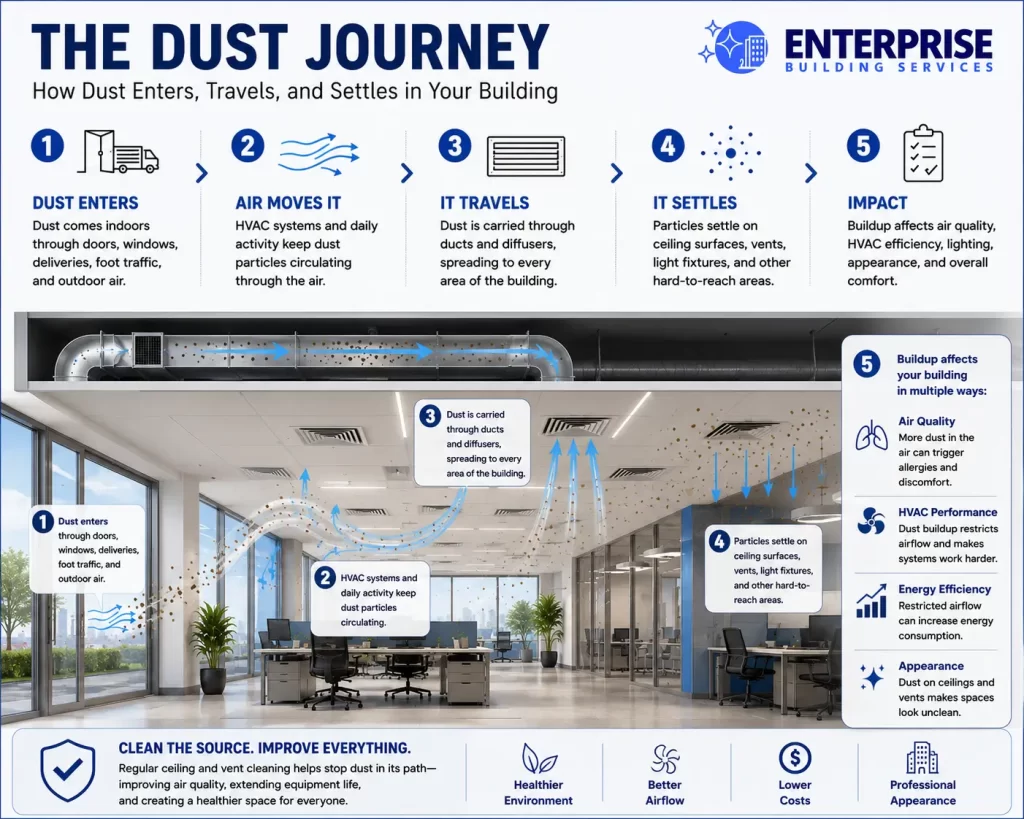
Dust follows a predictable path through most commercial buildings. Understanding that path explains why overhead surfaces collect more buildup than many people expect.
Small particles enter through loading docks, front entrances, employee foot traffic, open warehouse doors, and nearby construction activity. Once inside, normal airflow keeps those particles moving until they eventually settle on higher surfaces. In many real cases, the dirtiest areas are the ones people rarely inspect because they aren’t part of the daily cleaning routine.
Dust commonly enters through:
- Main entrances
- Loading docks
- Employee shoes and clothing
- Open service doors
- HVAC return vents
- Outdoor construction activity
After circulating, dust commonly settles on:
- Ceiling air vents
- Ceiling tiles
- Light fixtures
- Sprinkler heads
- HVAC grilles
- Duct openings
This movement also explains why routine cleaning alone doesn’t always reduce airborne dust. Our article about allergy-reducing office cleaning explains how controlling dust at multiple points throughout the building supports a healthier work environment.
Understanding how dust travels helps businesses make better maintenance decisions instead of waiting until buildup becomes obvious.
Warning Signs You Can Spot Without a Ladder
Most overhead cleaning needs become visible before they become serious. A careful walk through your building can often reveal early signs that overhead surfaces deserve closer attention.
We encourage facility managers and business owners to look for patterns rather than a single dusty vent. When several warning signs appear together, they usually indicate that dust has been collecting for longer than expected.
Ceiling and Vent Cleaning Begins With Careful Observation
A visual inspection provides useful information before professional cleaning begins. Looking at the condition of vents, ceiling tiles, and nearby fixtures often reveals how dust is moving through the building and where maintenance should be prioritized.
Common warning signs include:
- Dark rings around ceiling vents
- Yellow or brown ceiling tiles
- Dust hanging from vent covers
- Cobwebs near light fixtures
- Dirty return-air grilles
- Uneven airflow between rooms
- Water stains around ceiling panels
These conditions do not always point to a major problem, but they often suggest that overhead surfaces have gone longer than expected without maintenance. Based on actual scenarios, businesses that respond early usually have more flexibility when scheduling cleaning and avoiding disruptions to daily operations.
A visual inspection can also reveal issues beyond dust. Stained ceiling tiles, damaged vents, or moisture marks may require building maintenance in addition to cleaning, making early detection valuable for long-term facility care.
What Dirty Ceiling Vents Say About Your Building
People notice the overall condition of a workplace even when they aren’t intentionally looking at the ceiling. Clean overhead surfaces contribute to a professional environment, while visible dust can quietly affect how visitors, employees, and inspectors view the facility.
Employees spend hours inside the building every day, so they become familiar with small changes over time. Clients, vendors, and job candidates often notice cleanliness within moments of entering a reception area or conference room. Those impressions help shape how they view the business as a whole.
| Visitor | What They Often Notice |
|---|---|
| Clients | Overall professionalism |
| Employees | Workplace care |
| Inspectors | Building maintenance |
| Vendors | Facility standards |
| Job candidates | Attention to detail |
A clean building supports more than appearance. It also contributes to a workplace where employees feel their environment is well maintained. Our article on healthier office staff wellness explains how consistent cleaning practices support employee comfort and confidence.
Looking up occasionally provides a simple way to judge whether the entire building is receiving the same level of care as the areas everyone sees first.
Ceiling Cleaning Helps More Than Appearance
A clean ceiling supports much more than the appearance of a building. Dust that collects above eye level can affect lighting, airflow, ongoing maintenance, and how comfortable a workspace feels throughout the day.
When we inspect commercial properties, we often find that overhead dust has been building for months without anyone noticing. As heating and cooling systems move air through the building, that dust can continue circulating until it is removed as part of a complete maintenance plan.
| Benefit | Why It Matters |
|---|---|
| Better lighting | Clean fixtures allow more light to reach work areas. |
| air quality support | Less dust around vents helps reduce airborne particles. |
| odor reduction | Removing accumulated dust helps eliminate trapped odors. |
| Better airflow | Cleaner vents support more consistent air movement. |
| Preventive maintenance | Small issues are easier to identify before they become larger repairs. |
These improvements often work together. A cleaner ceiling not only helps the building look better, but it also supports a healthier and more comfortable workplace for employees and visitors.
In some facilities, cleaning also reveals stained or damaged ceiling panels that may benefit from tile restoration. Identifying those issues early gives property managers more flexibility when planning future maintenance.
When Overhead Cleaning Should Be Scheduled
The right cleaning schedule depends on how the building is used rather than the season alone. A warehouse, medical office, and corporate office all collect dust at different rates, making regular assessments more valuable than relying on a fixed calendar.
Facilities that schedule inspections before heavy HVAC use often have more options for planning maintenance. Waiting until visible dust appears usually means the buildup has been developing for much longer than expected.
Maintenance Decision Guide
| Building Type | Suggested Assessment |
|---|---|
| Recently renovated | As soon as construction dust settles |
| Warehouse | Every six months |
| Medical office | More frequent inspections |
| Office building | Annual assessment |
| Restaurant | Customized schedule |
This framework provides a practical starting point rather than a rigid schedule. Every building has different occupancy levels, ventilation systems, and daily activity.
Our article about cleaning vs. disinfecting also explains why routine cleaning and office disinfection services solve different maintenance needs. Understanding those differences helps businesses build a more complete facility care plan.
How We Clean Overhead Areas Safely
Professional overhead cleaning begins with careful planning. Every facility has different ceiling heights, work schedules, and equipment that require a thoughtful approach before cleaning starts.
We first assess the building, identify sensitive work areas, and choose equipment that allows us to clean efficiently while minimizing disruption to normal business operations. Based on actual scenarios, planning the work before cleaning begins often produces better results and reduces interruptions for employees.
Our Cleaning Process
- Complete a facility assessment.
- Protect nearby work areas.
- Remove overhead dust safely.
- Clean vents, fixtures, and surrounding ceiling surfaces.
- Perform a final quality inspection.
After the work is complete, we review the cleaned areas to confirm that vents, ceiling surfaces, and fixtures meet our quality expectations before considering the project finished.
Many businesses combine office cleaning services with facility disinfection services or event cleaning services to keep their facilities consistently clean throughout the year.
Questions We Often Hear
Many business owners wonder whether overhead cleaning is necessary if dust is not immediately visible. The answer usually depends on building activity, ventilation, and how quickly dust collects inside the facility.
Regular inspections help identify developing issues before heavy buildup becomes noticeable. They also make it easier to decide whether cleaning should happen now or later.
How often should ceilings be inspected?
Most office buildings benefit from an annual inspection, while warehouses, medical facilities, and buildings with higher traffic often require more frequent reviews.
Can dirty vents affect indoor air?
Yes. Dust around vents can continue circulating as air moves through the building. The EPA’s Indoor Air Quality guidance explains why controlling dust sources contributes to healthier indoor environments.
Businesses looking for additional maintenance guidance can also browse our frequently asked questions for answers to common service questions.
Making the Right Decision for Your Facility
Waiting until overhead dust becomes obvious usually means it has already been collecting for months. Ceiling and vent cleaning works best when it becomes part of a preventive maintenance strategy instead of a reactive cleaning project.
At Enterprise Building Services (EBS) Commercial Clean, we believe every maintenance decision should begin with a careful evaluation of the building. Understanding the condition of ceilings, vents, and other overhead surfaces makes it easier to plan cleaning that fits the facility instead of following a one-size-fits-all schedule.
Industry organizations such as ASHRAE and OSHA also emphasize the importance of maintaining healthy indoor environments through proper building maintenance and ventilation practices.
Ready to Improve Your Building From the Top Down?
A cleaner workplace starts with paying attention to the areas many people overlook. When ceilings, vents, and other overhead surfaces are included in your maintenance plan, the entire building benefits from a cleaner, more professional appearance.
If you’d like to learn more about our experience, visit our commercial cleaning company page or read our customer reviews to see what clients say about working with our team.
When you’re ready, request your free cleaning consultation or call (708) 296-9650. We’ll help you evaluate your facility and recommend a maintenance plan that fits your building and schedule.