

Spring Allergies Getting Worse Indoors? Allergy-Reducing Cleaning Strategies That Help
Allergy-reducing cleaning strategies help reduce indoor allergens by removing particles from carpets, vents, furniture, and shared surfaces. During spring, pollen enters commercial buildings through foot traffic, open doors, and ventilation systems, where it settles and continues circulating in indoor air.
Without consistent cleaning, these particles build up across workspaces and affect comfort, air quality, and productivity. Structured seasonal cleaning helps control airborne irritants and maintain healthier environments for employees and visitors.
Businesses can implement targeted solutions with commercial cleaning services from Enterprise Building Services to improve air freshness and reduce allergy-related disruptions.
Why Allergies Often Worsen Indoors During Spring
Spring often brings rising allergy symptoms inside commercial buildings. Once indoors, particles settle into carpets, fabrics, and ventilation systems where they can remain for extended periods and continue circulating through indoor air, a pattern linked to how building ventilation systems distribute and refresh indoor air described by the Centers for Disease Control and Prevention (CDC).
Several conditions contribute to increasing indoor allergens during spring, making allergy-reducing cleaning strategies essential for maintaining indoor air conditions.
Outdoor Particles Enter Buildings Daily
Employees, visitors, and delivery activity regularly bring outdoor debris into commercial spaces.
Common entry points include:
- Shoes tracking debris from parking areas and sidewalks
- Entryways allowing airborne particles to drift indoors
- Delivery traffic increasing floor contamination
Once indoors, particles settle into carpets, fabrics, and ventilation systems where they can remain for extended periods and continue circulating through indoor air.
Consistent allergy prevention cleaning helps remove these contaminants before they spread across workspaces.
Winter Dust Accumulation Becomes Airborne
Commercial buildings remain closed for longer periods during colder months. Dust, fibers, and skin particles gradually collect in carpets, chairs, and office equipment.
When spring activity increases and ventilation systems run more frequently, those particles become airborne again. Without thorough seasonal cleaning, indoor allergen levels can rise quickly and affect workplace comfort.
Ventilation Systems Circulate Allergens
Ventilation systems continuously move indoor air through vents and ductwork. When debris collects inside vents or filters, allergens may circulate through meeting rooms, workstations, and shared areas.
Routine filter replacement and vent maintenance help maintain airflow while limiting allergen movement throughout the building.
How Allergies Affect Productivity and Allergy-Reducing Cleaning Strategies
Indoor allergens impact more than comfort. They can also affect employee performance and workplace satisfaction.
Common workplace effects include:
- Difficulty concentrating during tasks
- Increased sick days during peak pollen season
- Eye irritation and respiratory discomfort
- Reduced meeting productivity
- Lower overall workplace morale
Cleaner environments supported by allergy-reducing cleaning strategies help reduce these disruptions and support more consistent productivity across teams.
Hidden Office Areas Where Allergens Accumulate
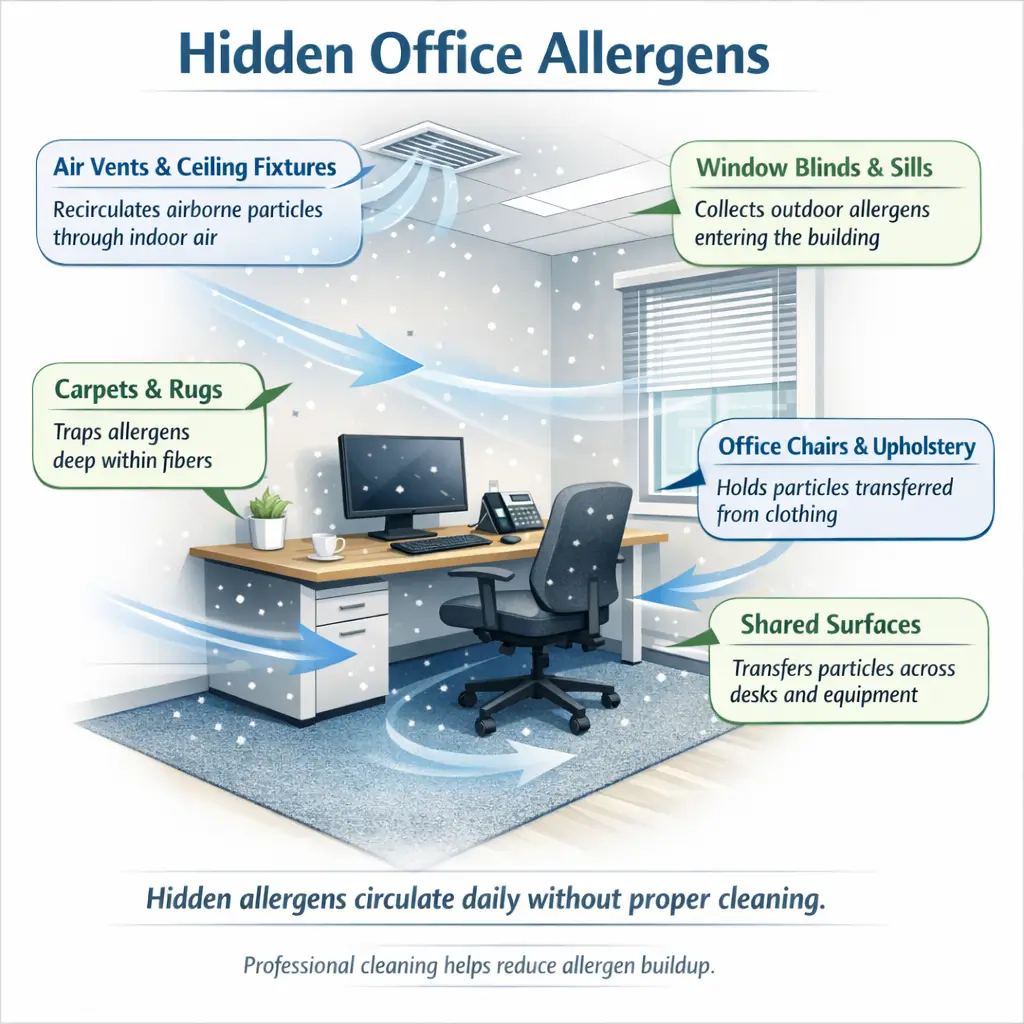
Some allergens gather in areas that routine cleaning often overlooks. Over time, these locations allow particles to build up and settle into surfaces where they remain unnoticed. Focusing attention on these hidden zones helps reduce allergen reservoirs inside busy workplaces.
Carpets and Fabric Seating
Carpets and upholstered furniture act like large particle traps. Fibers hold debris that settles from daily movement throughout the workspace.
Reception seating, meeting room chairs, and breakroom couches frequently collect particles transferred from clothing and bags.
Effective maintenance typically includes:
- HEPA vacuuming for deep particle capture
- Scheduled carpet extraction cleaning
- Upholstery care for shared seating
These services remove debris embedded beneath fabric surfaces.
Air Vents and Overhead Fixtures
Upper surfaces often receive less frequent attention during routine maintenance.
Common areas where buildup occurs include:
- Ventilation grilles
- Ceiling fans
- Light fixtures
- Ceiling tiles
Cleaning these elevated surfaces helps reduce particles that can fall onto desks and flooring below.
Window Frames, Blinds, and Sills
Window frames and blinds easily collect outdoor debris carried indoors. These narrow surfaces often gather layers of fine particles that remain unnoticed until disturbed.
Routine wiping and dust removal prevent buildup from spreading onto nearby desks, equipment, and flooring.
Office Chairs and Shared Furniture
Collaborative workspaces and lounge areas experience constant use throughout the day. Chairs and shared seating absorb particles transferred through clothing and movement.
Regular upholstery maintenance helps keep high-traffic seating areas cleaner while supporting a healthier workplace environment.
Hidden allergens collect in overlooked areas like upholstery and ventilation points. A focused cleaning plan targets these problem zones directly and helps maintain cleaner indoor conditions. Contact Us Now to improve workplace comfort.
Daily Allergy-Reducing Cleaning Habits
Consistent daily cleaning plays a key role in limiting allergen buildup inside busy workplaces. Small maintenance routines performed throughout the day help remove particles before they settle into surfaces or fabrics.
The following habits support cleaner indoor environments.
Use HEPA Vacuum Systems
High-efficiency HEPA vacuum systems capture extremely fine particles that standard equipment may leave behind. Regular vacuuming of floors and shared areas helps maintain cleaner surfaces in spaces with frequent foot traffic.
Dust With Microfiber Cloths
Microfiber cloths capture particles within their fibers rather than spreading them across surfaces.
Routine dusting should include:
- desks
- shelves
- electronics
- conference tables
- breakroom counters
Regular surface cleaning helps keep shared workspaces free from accumulating debris.
Clean Window Frames and Sills
Window frames and sills often gather fine debris carried indoors. Wiping these surfaces during routine cleaning prevents particles from settling onto nearby desks and flooring.
Maintain Air Devices
Office humidifiers, air purifiers, and diffusers require regular maintenance to remain effective. Cleaning reservoirs and vents helps prevent residue buildup that can affect indoor air circulation.
Deep Allergy-Reducing Cleaning Strategies for Allergy Season
Daily maintenance helps control surface debris, yet some particles settle deeper into building materials and require more thorough cleaning. Seasonal deep cleaning addresses these areas and helps maintain cleaner indoor conditions across busy workplaces.
Carpet Steam Extraction
Steam extraction reaches deep within carpet fibers where debris becomes embedded over time. This method removes particles that regular vacuuming cannot reach while restoring the appearance and cleanliness of carpeted areas.
Vent Cleaning and Filter Replacement
Vent openings and filters collect debris that can restrict airflow and reduce system efficiency. Seasonal maintenance typically includes:
- replacing air filters
- cleaning vent openings
- inspecting duct buildup
Professional cleaning teams often perform these tasks during scheduled maintenance programs.
Ceiling and Lighting Maintenance
Ceiling tiles and lighting fixtures can collect fine debris that may settle onto desks, floors, and equipment when disturbed. Routine cleaning of these elevated surfaces helps keep work areas cleaner.
Sanitizing High-Touch Surfaces
Shared surfaces experience frequent contact throughout the workday and may accumulate debris transferred through hands and daily activity.
Common high-touch surfaces include:
- keyboards
- desk armrests
- conference tables
- breakroom counters
- door handles
Regular sanitation helps maintain cleaner shared environments across workspaces.
Organizations planning seasonal maintenance can review available options through our commercial cleaning services.
Workplace Habits That Help Reduce Indoor Allergens
Cleaning routines become more effective when supported by practical workplace habits. Small daily actions by employees can help limit the amount of debris introduced into shared work areas and prevent particles from spreading throughout the building.
Entry Mat Systems
Multi-layer floor mats placed at entrances help capture debris before it reaches interior flooring. These mats collect particles from footwear and reduce the amount of outdoor material carried into common areas.
Controlled Window Use
Opening windows can increase ventilation, yet it may also allow outdoor particles to enter during peak allergy hours. Monitoring local conditions and limiting window use during high pollen periods helps maintain cleaner indoor environments.
Fragrance Awareness
Strong perfumes and aerosol sprays may irritate employees who experience seasonal sensitivities. Encouraging fragrance-aware workplace practices can improve overall comfort for staff members and visitors.
Hand Hygiene
Employees returning from outdoor breaks may carry particles on hands and clothing. Regular handwashing helps reduce the transfer of debris onto shared equipment, desks, and workplace surfaces.
How Enterprise Building Services Supports Healthier Workspaces
Professional cleaning teams play an important role in maintaining healthier indoor environments during peak allergy periods. Businesses rely on consistent maintenance routines to help limit debris buildup across frequently used workplace areas.
Enterprise Building Services delivers commercial cleaning programs focused on maintaining cleaner work environments across key areas such as:
- carpets and flooring
- ventilation systems
- shared furniture
- high-touch surfaces
Service programs include:
- HEPA-standard vacuum equipment
- environmentally responsible cleaning products
- vent and ceiling maintenance
- customized allergen-reduction cleaning plans
Each client receives a detailed cleaning checklist designed to support consistent sanitation and help reduce airborne irritants throughout the building.
A local client recently shared:
“After our building scheduled seasonal deep cleaning, our team noticed fewer allergy complaints and much better comfort during spring.”
Professional cleaning teams play an important role in maintaining healthier indoor environments during peak allergy periods. Businesses rely on consistent maintenance routines to help limit debris buildup across frequently used workplace areas.
Enterprise Building Services delivers commercial cleaning programs focused on maintaining cleaner work environments across key areas such as:
- carpets and flooring
- ventilation systems
- shared furniture
- high-touch surfaces
Service programs include:
- HEPA-standard vacuum equipment
- environmentally responsible cleaning products
- vent and ceiling maintenance
- customized allergen-reduction cleaning plans
Each client receives a detailed cleaning checklist designed to support consistent sanitation and help reduce airborne irritants throughout the building.
A local client recently shared:
“After our building scheduled seasonal deep cleaning, our team noticed fewer allergy complaints and much better comfort during spring.”
Frequently Asked Questions
How Often Should Offices Schedule Deep Cleaning During Allergy Season?
Many workplaces schedule deep cleaning once at the beginning of spring and again during peak pollen periods, depending on building traffic and occupancy.
Do HVAC Systems Affect Indoor Allergens?
Yes. HVAC systems circulate indoor air continuously. Dirty filters or vents can spread allergens throughout a building. Routine maintenance helps maintain cleaner airflow.
Are Carpets A Major Source Of Indoor Allergens?
Carpet fibers easily trap dust and pollen. Regular HEPA vacuuming combined with periodic steam extraction helps control buildup.
Can professional cleaning improve employee productivity?
Cleaner indoor environments reduce allergy symptoms, helping employees remain comfortable, focused, and productive during busy workdays.
Creating a Healthier Workplace During Allergy Season
Seasonal allergens can circulate quickly through busy commercial buildings. Regular cleaning of carpets, ventilation areas, furniture, and shared surfaces helps reduce airborne particles and maintain cleaner indoor environments for employees and visitors.
Consistent maintenance routines supported by allergy-reducing cleaning strategies help reduce airborne particles and maintain cleaner indoor environments. Businesses that prioritize seasonal cleaning often notice fewer allergy-related disruptions and fresher indoor conditions across the building.
Organizations seeking dependable support can review commercial cleaning services to help maintain cleaner, healthier work environments throughout the year.
Don’t let pollen pollute your productivity. Schedule an allergy-reduction cleaning service and give your team the air quality they deserve. Call (708) 296-9650 to create a cleaner, more comfortable workplace that supports focus, health, and daily performance.