
Raising the Bar for Safer, Compliant Medical Office Cleaning
Healthcare Spaces Require More Than a Surface-Level Clean
Medical office cleaning plays a critical role in limiting exposure to airborne pathogens, surface bacteria, and high-touch contamination risks. Enterprise Building Services delivers commercial and healthcare facility cleaning services specifically built for clinical settings—where safety, compliance, and accountability matter most.
Even spotless rooms can harbor resilient organisms like MRSA or C. difficile, which survive for days on surfaces if not properly disinfected. These risks don’t respond to surface-level solutions or improvised routines.
Effective healthcare cleaning requires a systematic approach grounded in infection control—not visual results. Anything less increases liability, reduces trust, and puts patients at risk.
Medical Office Cleaning Requires Strict Safety Protocols
Cleaning a healthcare space is a regulated process—not a task. Every movement, product, and procedure within medical office cleaning must follow a specific system to prevent contamination and meet safety standards.
🟢 Color-Coded Tools
Microfiber cloths and mops are assigned by area (e.g., red for restrooms, blue for patient rooms) to prevent bacteria transfer between spaces.
🟢 PPE Enforcement
Gloves, masks, and sometimes gowns are used during cleaning, not just patient care. This protects both cleaners and patients.
🟢 Chemical Usage
Disinfectants used in healthcare must be EPA-registered, hospital-grade, and proven effective against high-risk pathogens. As part of eco-friendly office cleaning practices, each product requires a specific dwell time—the amount of time a disinfectant must remain wet on a surface to be effective. Most require 2 to 10 minutes.
🟢 Ventilation Protocol
After chemical use, enclosed spaces may need time to air out. Improper ventilation can lead to respiratory issues for staff or patients.
🟢 Documentation
Cleaners are trained to log procedures, dwell times, and chemical usage—creating a transparent record for health inspections.
All of this ties into meeting both CDC infection prevention guidelines and OSHA workplace safety requirements. Cleaners who skip steps risk more than mess—they risk violations.
Protect your staff, patients, and compliance rating with a cleaning plan built for medical risks. Call (708) 296-9650 for expert support tailored to your office schedule, safety needs, and inspection readiness—before cold and flu season takes hold.
High-Risk Zones That Require Daily Disinfection
Not all areas in a medical office carry equal risk—but many are high-contact and high-speed. These are zones where bacteria multiply quickly and are frequently touched by multiple people.
🧼 Exam Rooms
- Wipe-downs needed after every patient
- Surfaces include exam tables, drawer handles, chair arms, otoscope handles
🧼 Waiting Areas
- Disinfect shared items like pens, clipboards, touchscreen kiosks
- Upholstery and armrests should be sanitized at least twice daily
🧼 Reception Desks
- Phones, keyboards, counters, and pens must be sanitized multiple times per shift
- Consider using barrier sleeves for shared equipment
🧼 Restrooms
- A breeding ground for bacteria if not disinfected regularly
- Key touchpoints: door locks, faucet handles, toilet flush buttons
🧼 Staff Lounges
- Shared appliances and tables are disinfected daily
- These areas often see the most relaxed habits, which raises exposure risk
The frequency of office disinfection services should adjust to how many people use the space—not just the time of day. High-volume practices need more than a nightly sweep—they need a schedule built around risk.
How Medical Office Cleaning Goes Beyond Regular Service
There’s a significant gap between general tidiness and clinical-grade disinfection.
General commercial spaces might aim for appearance—smudge-free glass, trash removal, dusted desks. In contrast, medical office cleaning requires measurable hygiene. It’s not about how it looks—it’s about how many microbes remain.
Key differences include:
🧪 Documentation
Every room cleaned in a healthcare facility is documented. Logs include exact products used, application time, and technician initials—often required during audits or infection tracking.
🧪 Protocols over Preferences
Cleaners cannot freelance the process. Each surface, room, and product has its assigned approach.
🧪 Infection Control Training
Understanding cross-contamination, biohazard disposal, and antimicrobial resistance is mandatory.
🧪 Product Requirements
Hospital-grade products are used, some of which aren’t available for general use due to concentration levels and surface compatibility needs.
🧪 Audit Readiness
The cleaning team must maintain standards capable of passing unannounced inspections from health departments or regulatory bodies.
Using general cleaners in a medical space creates hidden gaps—ones that won’t be obvious until there’s an incident or compliance check.
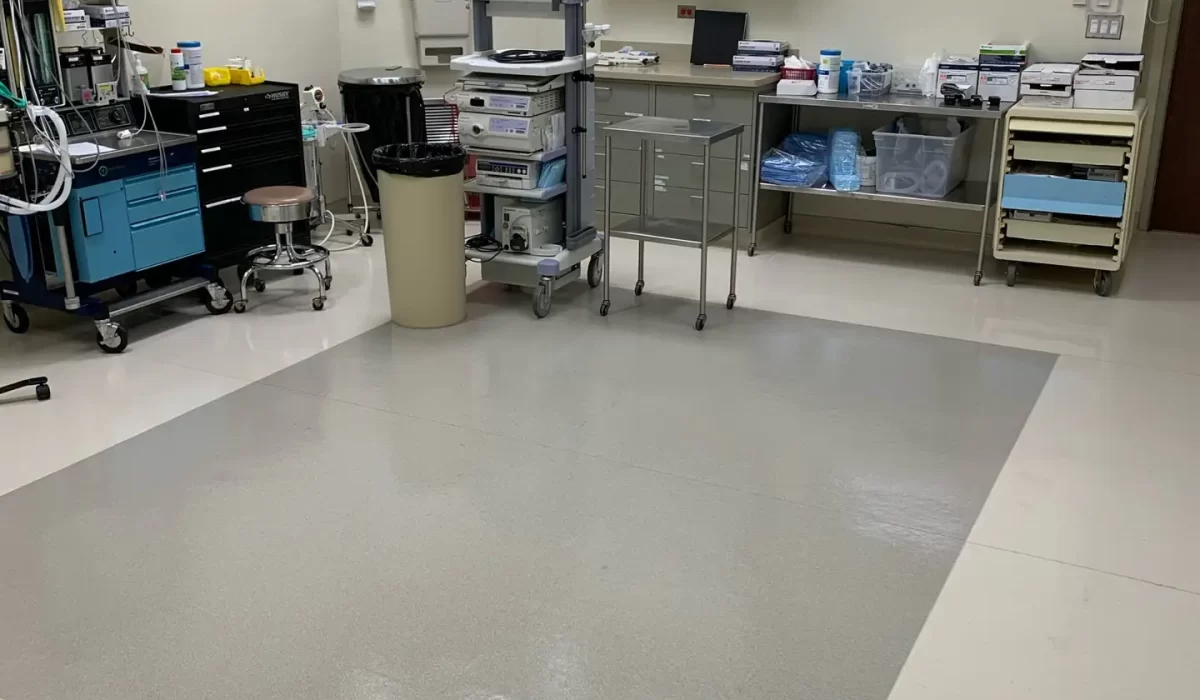
Tired of inconsistent cleaning or missed touchpoints?
Our team builds safer environments where staff feels protected and patients notice the difference from the moment they walk in. Contact us for healthcare-grade service that aligns with your standards.
Staff Training and Certifications for Healthcare Facilities
Not every cleaning crew is equipped for the responsibilities of healthcare.
It’s critical that the team servicing your space is trained and certified for the specific demands of medical environments. That includes:
📋 HIPAA Awareness
Cleaners working in medical spaces may see charts, whiteboards, or digital records while moving through exam rooms or staff areas. They’re trained to avoid reading or sharing protected information—intentionally or accidentally.
📋 Infection Control Certification
Professionals are taught to clean from “clean to dirty,” change gloves between rooms, and isolate contaminated tools. Cross-contamination is the number one risk in shared-use environments.
📋 Bloodborne Pathogen Training
From sharps containers to examination table paper, a trained cleaner knows how to handle high-risk waste—even in outpatient settings.
📋 Understanding of Biofilm
Biofilms are colonies of bacteria that resist standard cleaning. Special products and scrubbing are required to break them down—especially in sinks and drains.
When you hire for medical office cleaning services, you’re not just hiring for appearance—you’re hiring for liability prevention.
Benefits of Partnering With a Professional Janitorial Service
A medical facility can’t rely on one-size-fits-all cleaning. It needs a service built for clinical safety, schedule flexibility, and strict confidentiality—especially in environments that demand consistent, high-standard medical office cleaning.
Partnering with a trained, healthcare-specific janitorial team offers practical advantages—many of which go beyond surface-level results.
✨ Flexible Scheduling That Works for You
Early mornings, late evenings, or mid-day shifts—professional janitorial services should happen when your office needs it, not the other way around. Professional teams adjust to patient flow and operational hours, keeping disruption minimal.
👥 Familiar Faces, Fewer Oversights
A consistent crew becomes an extension of your team. They learn your protocols, floor plan, and cleaning priorities—leading to fewer mistakes and less time spent explaining expectations.
🔐 Built-In Confidentiality
Cleaners in medical settings may encounter sensitive information. Trained professionals know how to operate discreetly without risking HIPAA compliance or patient trust.
🧪 Specialization That Scales
Teams experienced in both disinfecting services for businesses and clinical-grade protocols deliver targeted support. Whether you’re running a family clinic or a multi-room practice, the right process is applied to the right zone—every time.
📉 Proven Impact on Operations
One pediatric clinic in the Midwest saw a 40% drop in same-day cancellations after switching to a certified healthcare facility cleaning provider. Staff confidence improved, and patients repeatedly mentioned cleanliness in post-visit feedback.
Choosing the right janitorial partner doesn’t just improve how your space looks—it changes how people experience your care.
Raise the Standard for Medical Office Cleaning Today
A clean-looking space doesn’t guarantee safety—especially in healthcare. What matters most often isn’t visible: properly disinfected surfaces, logged cleaning procedures, and confidence that every step met medical-grade standards.
Reused rags, rushed wipe-downs, or the wrong disinfectants don’t just fall short—they introduce serious risks. These habits can lead to illness transmission, failed health inspections, and a loss of patient trust.
Standard routines fall short in clinical spaces. Enterprise Building Services delivers healthcare-focused commercial cleaning services built to meet clinical demands—carried out by trained professionals who follow proven protocols, every time. Your staff and patients deserve a clean that meets the moment.