
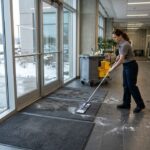
Cold weather cleaning challenges start at your front door: snow, road salt, and slush ride in on every pair of shoes. Add moisture, dry indoor air, and shorter days, and winter facility cleaning needs a different plan than the rest of the year.
The easiest way to understand those challenges is to follow winter as it moves through your building, from the parking lot to the restrooms. At each stop, here is what goes wrong and how to prevent it.
It Starts Before Anyone Walks Through the Door
Most winter mess begins outside. Parking lots and sidewalks collect snow, slush, ice melt, and road salt. Every person who walks in carries a little of it on their shoes, so exterior conditions directly shape your indoor cleaning workload.
✓ Keep walkways cleared and treated so people are not tracking in deep slush.
✓ Ask your snow and ice contractor which ice melt they use, since residue on interior floors is a known problem.
✓ Use a full entrance matting system. ISSA’s “Rule of 15s” calls for five feet each of scraper, wiper/scraper, and wiper mats at entries.
Follow the Snow Inside
Once winter crosses the threshold, it travels. Here is the typical path and what each stop needs:
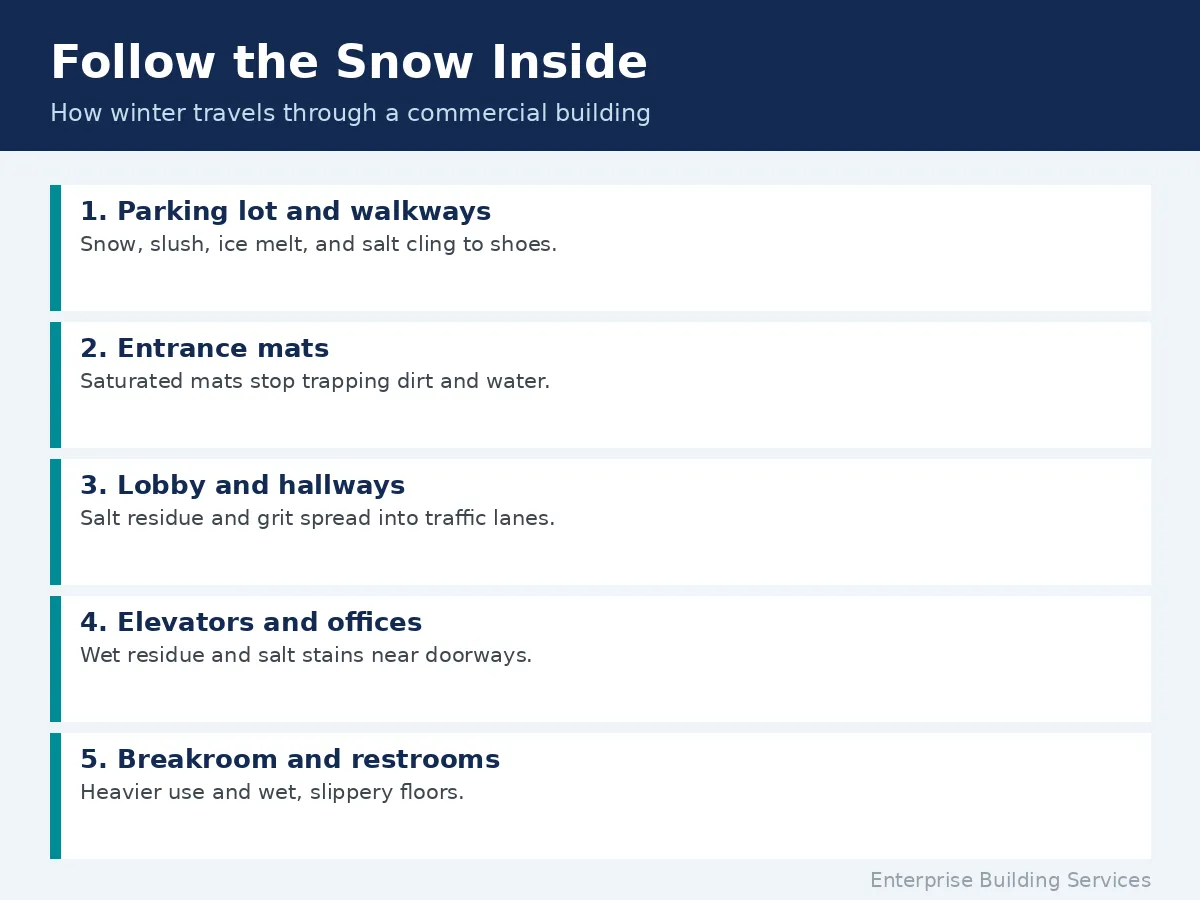
✓ Entrance mats: Mats stop working once saturated. Vacuum or swap them more often during storms.
✓ Lobby: Salt residue and standing water appear here first. Dust mop and spot mop throughout the day.
✓ Hallways: Grit spreads into traffic lanes and scratches floor finish. Dust mop daily and keep up with scheduled floor maintenance.
✓ Elevators: Small floors collect wet residue fast. Clean elevator floors and thresholds every shift.
✓ Offices: Carpet near doorways absorbs salt and moisture. Vacuum regularly and spot-treat salt stains, as covered in our guide to commercial carpet deep cleaning.
✓ Breakroom: More people stay in for lunch in winter. Give counters, appliances, and high-touch surfaces extra attention.
✓ Restrooms: Wet shoes plus heavy use create slippery floors. Check and dry floors more often during peak hours.
Winter's Hidden Enemies
Some of the biggest winter problems are not obvious dirt.
Salt and Ice Melt Residue
According to ISSA, ice melt can leave a white residue or a film that damages floor finishes and turns slippery when wet, and a neutral-pH ice melt remover works better than standard cleaners. For salt removal and matting tips, see our guide to winter floor care for commercial facilities.
Condensation and Indoor Humidity
Warm indoor air meets cold windows and exterior walls, and moisture that collects can lead to mold if ignored. The EPA recommends keeping indoor humidity below 60 percent, ideally between 30 and 50 percent.
Dark Entryways and Closed-Up Buildings
Shorter days mean entrances are often dim when people arrive and leave, so wet spots and debris are easier to miss. Buildings are also sealed up against the cold, which makes routine dusting and cleaning more noticeable when it slips.
The Winter Damage Chain Reaction
Small winter problems rarely stay small, and most cold weather cleaning challenges follow the same pattern. Here is how one wet shoe can turn into a costly repair:
Wet shoes → Water on the floor → Salt residue → Floor finish deterioration → Slip hazards → Emergency repairs → Higher maintenance costs
Breaking the chain early is far cheaper than fixing the end result. Good matting stops water at the door. Frequent dust and spot mopping removes salt before it eats into the finish. Scheduled floor strip and wax service rebuilds protection before damage reaches the floor itself.
Safety is part of this too. OSHA requires employers to keep floors clean and, to the extent feasible, dry. In winter, that takes more attention than any other season.
Creating Your Winter Cleaning Response Plan
Instead of a long checklist, use a simple response matrix so everyone knows what happens when.
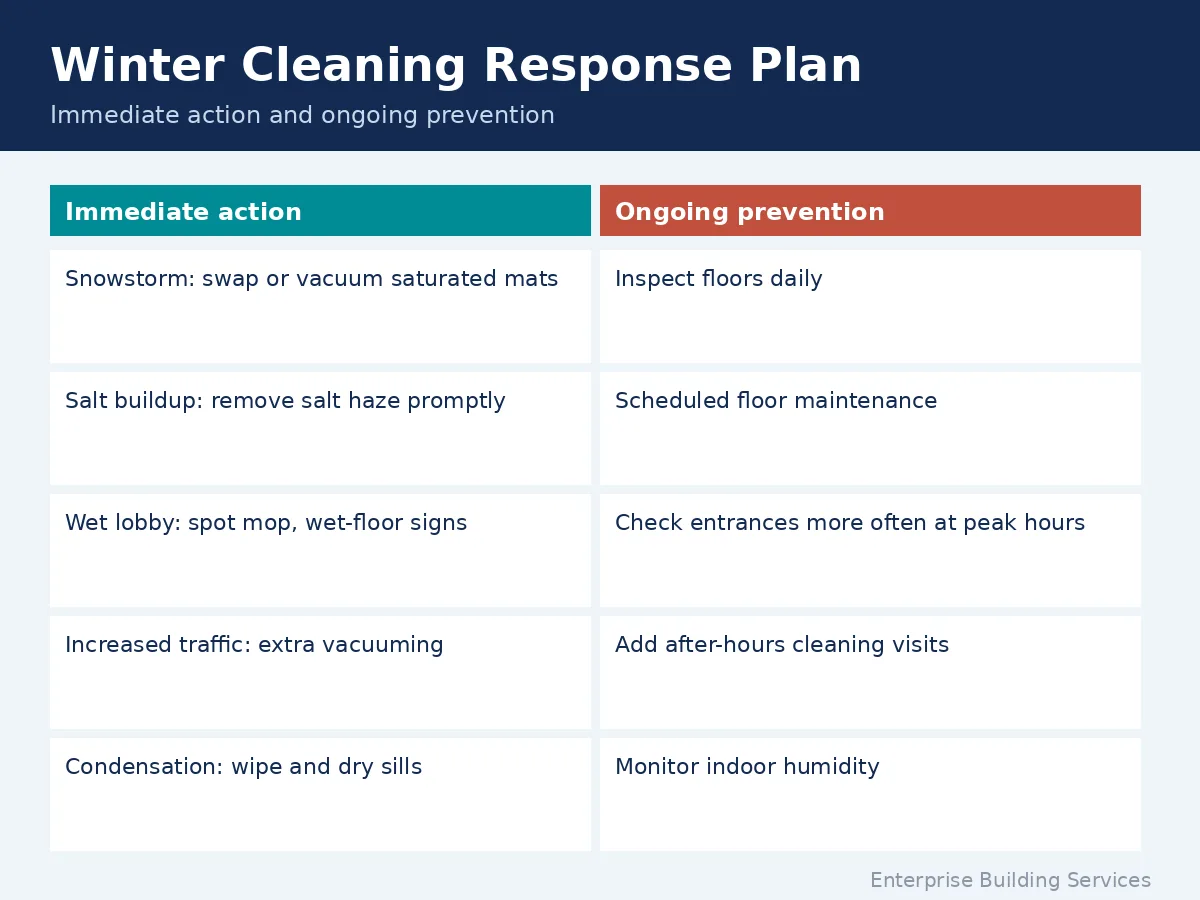
✓ Snowstorm: Swap or vacuum saturated entry mats now. Inspect floors daily.
✓ Salt buildup: Remove salt haze promptly and keep up scheduled floor maintenance.
✓ Wet lobby: Spot mop and place wet-floor signs. Check entrances more often during peak hours.
✓ Increased traffic: Extra vacuuming and dust mopping. Add after-hours cleaning visits.
✓ Condensation near windows: Wipe and dry sills and frames. Monitor indoor humidity.
Review the plan with your cleaning provider before the first major storm, not after it. For more seasonal prep, see our tips for a spotless workplace this winter.
Key Takeaways
✓ Winter dirt starts outside, so entrance matting is your first defense.
✓ Salt residue and moisture are the hidden causes of floor damage.
✓ Small problems chain together into costly repairs if ignored.
✓ A simple response plan keeps everyone ready before the first storm.
Frequently Asked Questions
Which cold weather cleaning challenges should we tackle first?
Start at the entrance: matting and mat maintenance stop most of the water and salt before they spread.
Should our winter cleaning schedule change after the holidays?
Yes, the post-holiday period is a good time to reset. Our guide to deep cleaning in December for a healthier January explains how to plan it.
Keep Your Building Clean, Safe, and Welcoming All Winte
Enterprise Building Services provides commercial cleaning services across the Chicagoland area, where winter means months of snow, slush, and salt. We can build a seasonal plan around your facility’s entrances, floors, and traffic patterns, including office cleaning.
Our team can clean before, during, or after business hours on a daily, weekly, monthly, or one-time schedule, using the latest equipment and EPA-registered, hospital-grade disinfectants.
Call (708) 296-9650 or contact EBS to plan your winter cleaning and keep your building ready for the coldest months of the year.